
Introduction: A Simple Analogy That Explains Gut Healing
Imagine you have a cut on your skin.
Even if you do not apply medicine, the body slowly heals it as long as you protect it from infection and avoid scratching it.
But if you keep scratching the wound repeatedly, the healing process never completes.
A similar process happens inside the body — particularly in the intestinal lining.
When the intestine becomes inflamed or injured, continuous digestion of heavy foods behaves like constant scratching of an internal wound. This irritation can delay healing.
That is why traditional diets often recommend soft and light foods such as khichdi, daliya, buttermilk, and stewed fruits when someone experiences digestive problems.
These foods reduce stress on the intestine and allow the body to repair itself.
The Medical Concept: Bowel Rest
In both modern medicine and naturopathy, this idea is known as bowel rest.
Bowel rest means reducing the workload on the digestive system so the intestinal lining can repair damaged cells.
When digestion becomes easier, the body can redirect energy toward:
- tissue repair
- immune regulation
- cellular regeneration
Instead of spending that energy breaking down heavy foods.
Why Heavy Foods Delay Gut Healing
Mechanical Friction
Certain foods physically rub against the intestinal wall.
Examples include:
- raw vegetables
- seeds
- coarse grains
- tough meats
When the intestine is inflamed, these foods may irritate the lining the same way scratching irritates a skin wound.
Digestive Stress
Heavy meals require strong digestive chemicals such as:
- stomach acid
- bile
- digestive enzymes
These secretions can irritate already damaged intestinal tissue.
Increased Intestinal Movement
Large or heavy meals stimulate strong intestinal contractions called peristalsis.
These movements can disturb the healing intestinal surface repeatedly.
Soft foods reduce this mechanical stress.
The Remarkable Regeneration of the Gut
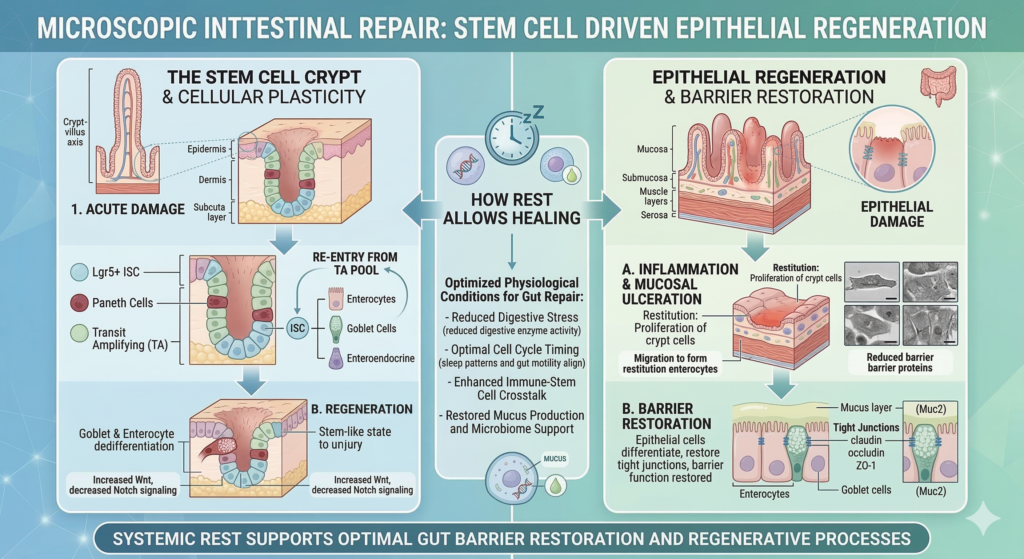
The human intestinal lining is one of the fastest renewing tissues in the body.
Under normal conditions, the entire lining regenerates every 3 to 5 days.
When irritation is minimized, the gut can repair itself very efficiently.
The Three Stages of Intestinal Healing
1. Immediate Repair (Epithelial Restitution)
Within hours of injury:
Healthy neighboring cells flatten and move across the damaged area.
This quickly seals the intestinal barrier and prevents bacteria from entering the bloodstream.
However, rough foods can disrupt this delicate process.
2. Cellular Rebuilding (Proliferation)
New intestinal cells are produced in microscopic structures called intestinal crypts.
These cells divide rapidly and migrate upward to replace damaged tissue.
This stage requires significant energy and nutrients.
When digestion is easier, the body can focus on regeneration.
3. Maturation and Protection
As new cells reach the intestinal surface, they mature into specialized cells responsible for:
- absorbing nutrients
- producing digestive enzymes
- secreting protective mucus
The mucus layer acts like an internal protective bandage.
The Immune System Inside the Gut
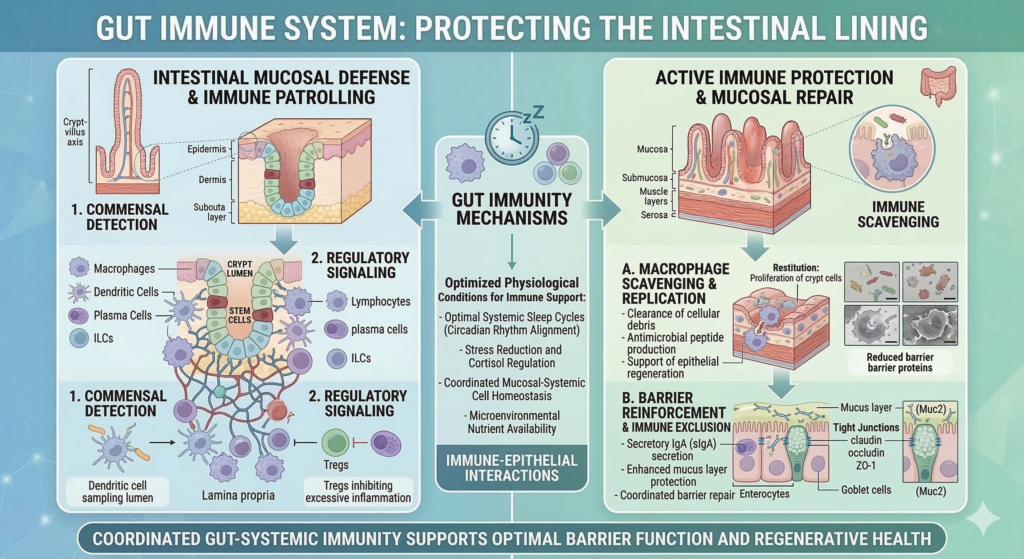
About 70% of the body’s immune system resides in the digestive tract.
This system is known as Gut-Associated Lymphoid Tissue (GALT).
When the intestinal lining becomes damaged, immune cells immediately respond.
Stage 1: Alarm
Immune cells detect harmful microbes entering through damaged tissue.
Inflammatory signals are released to protect the body.
Stage 2: Defense
Special immune cells attack invading bacteria.
However, these defensive chemicals may also damage nearby healthy cells if irritation continues.
Stage 3: Repair Mode
Once irritation decreases, the immune system switches to healing mode.
Special regulatory immune cells reduce inflammation and promote tissue repair.
This healing process works best when the intestine is given rest through gentle foods.
Foods That Support Gut Healing
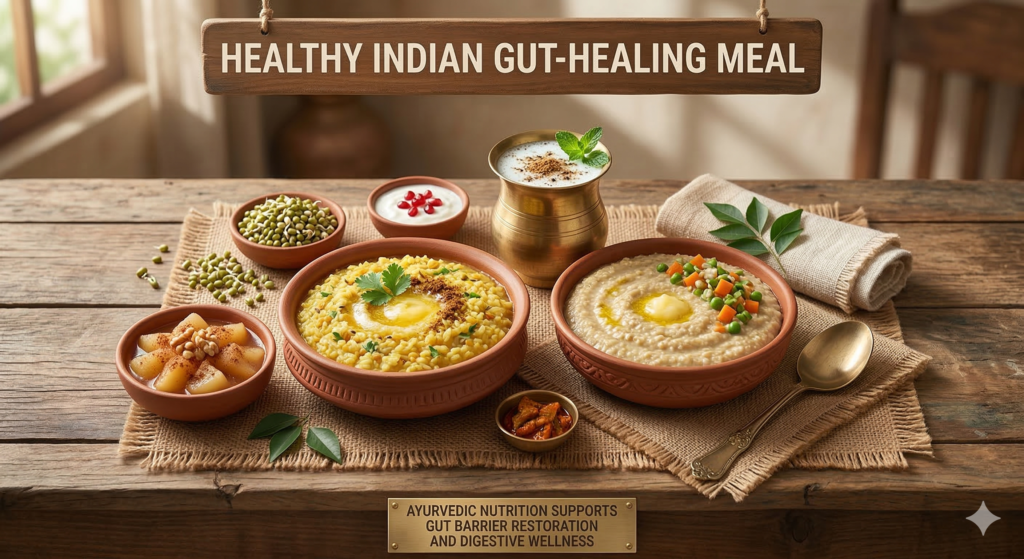
Daliya (Broken Wheat Porridge)
Benefits:
- soft and easy to digest
- provides quick energy
- gentle on the intestinal lining
Khichdi
A traditional combination of rice and lentils cooked into a soft texture.
Benefits include:
- balanced nutrition
- easy digestion
- minimal intestinal irritation
Buttermilk (Chaas)
Buttermilk contains beneficial probiotics that:
- support healthy gut bacteria
- improve digestion
- reduce inflammation
Stewed Apples
Cooking apples releases pectin, a soluble fiber that forms a soothing gel.
This gel protects the intestinal lining during healing.
Nutrients That Fuel Gut Repair
L-Glutamine
L-Glutamine is the primary energy source for intestinal cells.
It supports:
- intestinal barrier repair
- rapid cell regeneration
- immune balance
Sources include:
- moong dal soup
- vegetable broth
- fermented dairy
Herbal Infusions That Help the Gut Heal
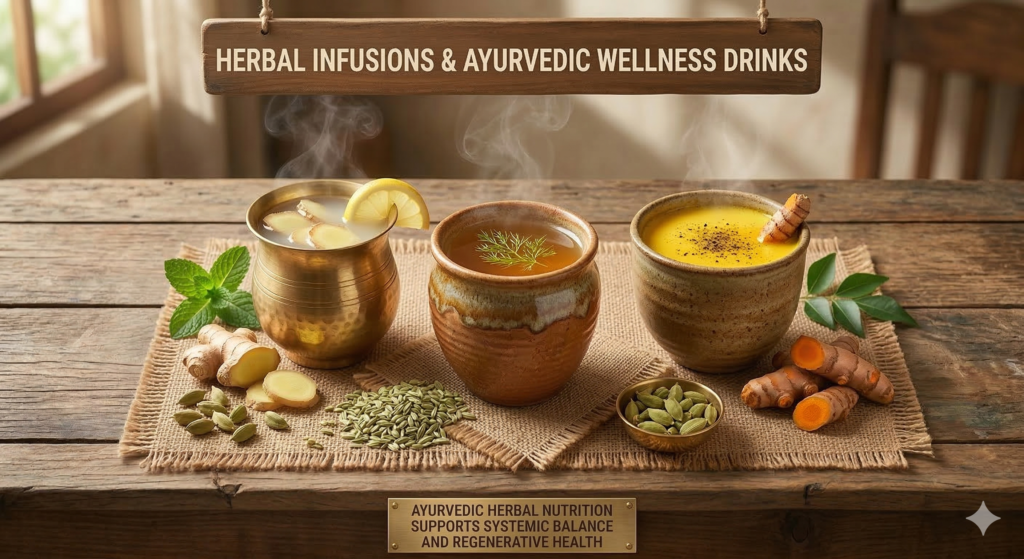
Ginger Water
Ginger helps:
- reduce inflammation
- improve digestive movement
- calm intestinal spasms
Turmeric Infusion
Turmeric contains curcumin, which:
- suppresses inflammatory signals
- supports tissue repair
- promotes immune balance
Fennel Seed Water
Fennel helps:
- relax intestinal muscles
- reduce bloating
- improve digestion
Natural Healing vs Medication
Doctors often prescribe acid-reducing medicines for digestive irritation.
These include medications that reduce stomach acid.
While these drugs reduce irritation, long-term use may:
- alter gut bacteria
- reduce nutrient absorption
- weaken digestive efficiency
Diet-based healing focuses on removing irritation while supplying nutrients needed for repair.
A Balanced Approach to Gut Healing
In many situations, the best approach combines both systems.
During severe symptoms, medication may help control inflammation.
During recovery, dietary rest and gut-friendly foods help restore the intestinal barrier naturally.
Practical Tips for Giving Your Gut Rest
If your digestion feels irritated:
• Eat soft, well-cooked foods
• Avoid heavy or fried meals temporarily
• Drink warm fluids instead of cold drinks
• Eat smaller meals more frequently
• Allow time for recovery before returning to regular diet
Conclusion
Your intestine is constantly working to digest food and absorb nutrients.
Like any hardworking organ, it occasionally needs rest and gentle care to repair itself.
Soft foods, proper hydration, and anti-inflammatory nutrition can create the right conditions for healing.
Sometimes the most effective medicine is simply removing the irritation and allowing the body to do what it naturally does best — heal itself.
Medical Disclaimer
This article is intended for informational and educational purposes only. It should not be considered medical advice. Individuals with persistent digestive problems such as ulcers, inflammatory bowel disease, or chronic symptoms should consult a qualified healthcare professional before making dietary or lifestyle changes.
Author
Ram Niwas Bansal
Independent researcher in nutrition, naturopathy, and preventive health.
Focused on integrating traditional dietary wisdom with modern medical science to promote practical wellness and digestive health.