Table of Contents
Introduction
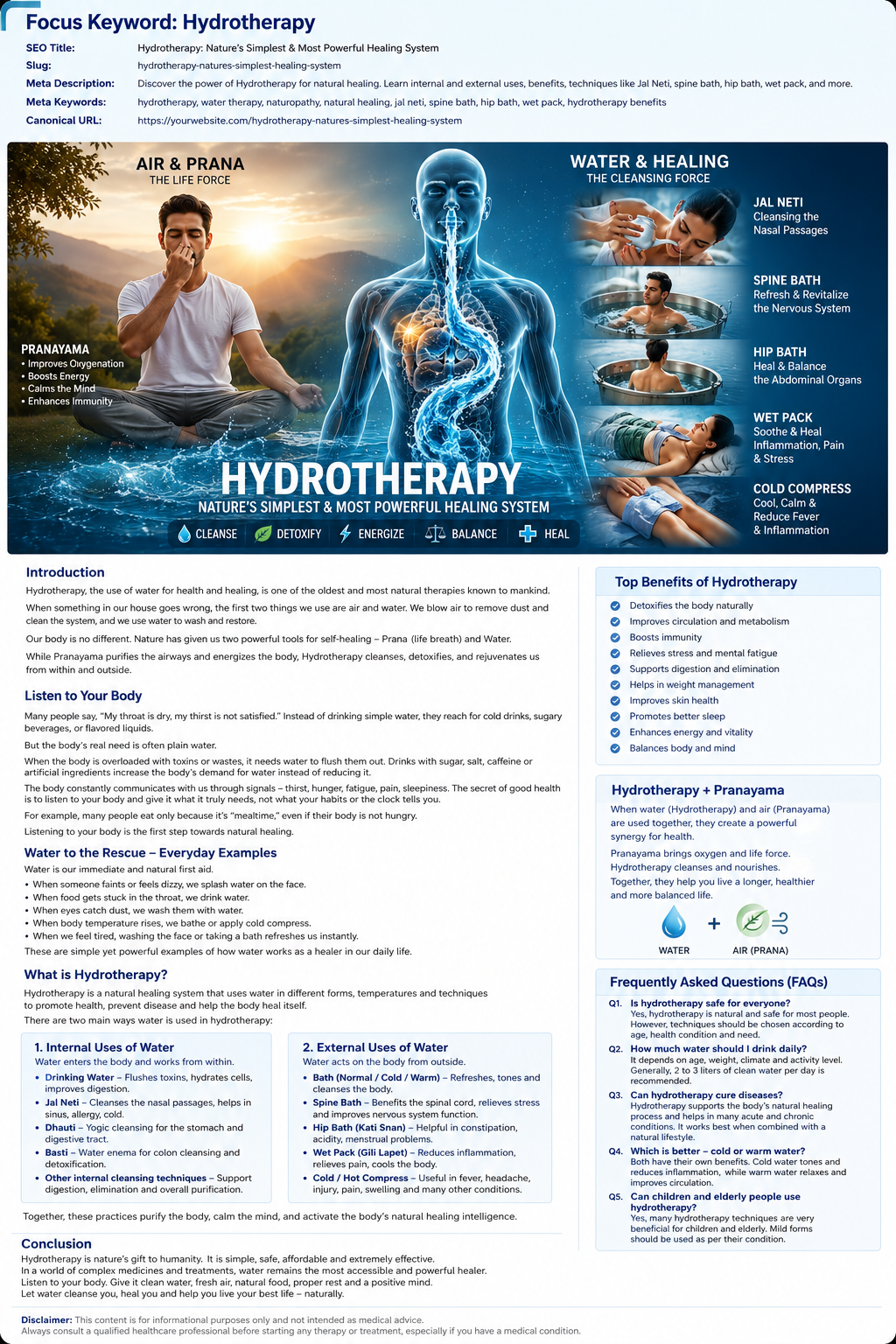
Hydrotherapy is one of the oldest and most effective natural healing systems known to mankind. Water has been an essential part of life since the beginning of civilization, and every living cell in the human body depends upon it. In naturopathy, water is not viewed merely as a drink but as a powerful natural healer capable of supporting the body’s innate ability to restore health.
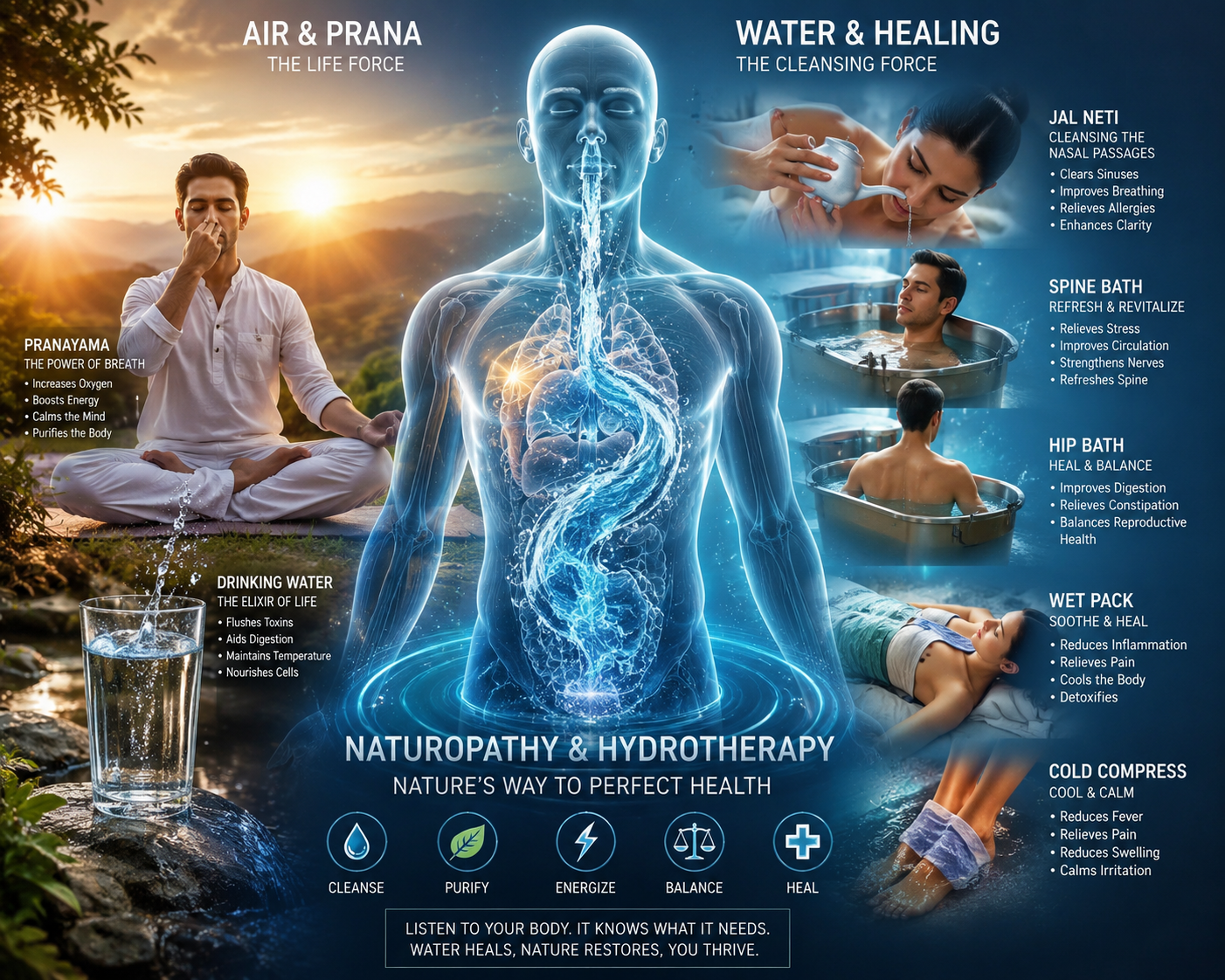
If we observe our daily life carefully, we will notice something interesting. Whenever a machine, appliance, or vehicle stops working properly, we instinctively use two things first—air and water. We open it, blow away the dust, and clean it with water if necessary. Surprisingly, nature has provided our body with the same two tools for maintenance and healing: Prana (life force through breath) and Water.
Pranayama energizes and revitalizes the body through proper breathing, while Hydrotherapy helps cleanse, nourish, and rejuvenate the body from within and without.
Listen to Your Body
One of the most important principles of naturopathy is:
“Listen to your body. It knows what it needs.”
Unfortunately, modern lifestyles have taught us to listen more to the clock than to our body’s signals.
Many people say:
“My throat feels dry.”
“I am thirsty, but my thirst is not getting satisfied.”
Instead of drinking plain water, they often consume cold drinks, sugary beverages, energy drinks, flavored waters, or other processed liquids.
The body, however, may be asking for something much simpler—water.
Our body continuously communicates through signals such as thirst, hunger, fatigue, pain, sleepiness, and discomfort. Good health often depends on understanding and responding appropriately to these signals.
Similarly, many people eat simply because it is lunchtime or dinnertime, even when the body is not genuinely hungry. The body may be asking for rest, hydration, or a lighter meal, but habit overrides natural wisdom.
Natural healing begins when we start paying attention to what the body actually wants rather than what our routines dictate.
Why Water Is So Important
The human body is approximately 60-70% water. Blood, lymph, cells, tissues, digestive fluids, and even the brain require water to function properly.
Water helps:
- Transport nutrients throughout the body
- Remove metabolic waste products
- Maintain body temperature
- Support digestion
- Lubricate joints
- Improve circulation
- Maintain healthy skin
- Support kidney function
- Facilitate detoxification processes
Without adequate hydration, every system in the body is forced to work harder.
Water: Nature’s First Aid
We unknowingly rely on water every day for relief and recovery.
Consider these examples:
When Someone Faints
If a person becomes unconscious or dizzy, the first thing people usually do is sprinkle water on the face. This immediate response reflects our instinctive understanding of water’s refreshing and stimulating effect.
When Food Gets Stuck in the Throat
What is the first remedy most people try?
A glass of water.
Water helps ease swallowing and provides immediate comfort.
When Dust Enters the Eyes
We wash the eyes with water.
When Fever Occurs
Cold compresses and wet cloth applications are commonly used.
When We Feel Exhausted
Washing the face with cool water often brings instant refreshment.
When the Weather Is Hot
A bath immediately restores comfort and reduces heat stress.
These everyday experiences demonstrate the remarkable healing role water plays in our lives.
What Is Hydrotherapy?
Hydrotherapy, also known as Water Therapy, is the therapeutic use of water in various forms, temperatures, and applications to support health and healing.
Hydrotherapy is based on the principle that water can stimulate circulation, assist elimination, calm the nervous system, and encourage the body’s natural healing mechanisms.
In naturopathy, Hydrotherapy is broadly divided into two categories:
1. Internal Uses of Water
These methods involve water entering the body and assisting internal cleansing and regulation.
Drinking Water
The simplest and most powerful form of Hydrotherapy. Adequate water intake helps maintain hydration, supports digestion, assists detoxification, and promotes overall health.
Jal Neti
Jal Neti is a yogic cleansing technique that uses warm saline water to cleanse the nasal passages.
Benefits include:
- Improved nasal hygiene
- Better breathing
- Reduced sinus congestion
- Relief from allergies
Dhauti
Dhauti is a traditional yogic purification practice that utilizes water to cleanse portions of the digestive tract.
Basti
Basti is a yogic colon cleansing technique involving water and is considered one of the cleansing methods used in traditional naturopathy and yoga practices.
Other Internal Cleansing Practices
Various naturopathic techniques use water internally to assist natural elimination and purification processes.
2. External Uses of Water
These therapies utilize water externally to stimulate healing responses in the body.
Bath Therapy
Different forms of baths are used in Hydrotherapy:
- Cold Bath
- Warm Bath
- Neutral Bath
- Contrast Bath
Each produces unique physiological effects.
Spine Bath
The spine bath focuses on the spinal region and is believed to have a calming effect on the nervous system.
Benefits may include:
- Relaxation
- Stress reduction
- Improved circulation
- Nervous system support
Hip Bath (Kati Snan)
Hip baths are commonly used in naturopathy for abdominal and pelvic health.
Wet Pack (Wet Sheet Pack)
A moist cloth or sheet is wrapped around part of the body to encourage relaxation and support natural healing processes.
Cold Compress
Cold water applications are often used for:
- Fever management
- Minor injuries
- Inflammation
- Headaches
Hot Compress
Warm water applications may help improve circulation and relaxation.
Hydrotherapy and Pranayama: Nature’s Two Doctors
If we think deeply, nature has provided us with two extraordinary healing tools that are available to everyone regardless of age, wealth, or social status:
Air (Prana)
Through conscious breathing and Pranayama, we improve oxygen delivery, enhance vitality, and calm the mind.
Water
Through Hydrotherapy, we cleanse, nourish, cool, stimulate, and restore the body.
Together, Pranayama and Hydrotherapy create a powerful foundation for natural health.
One purifies through breath.
The other purifies through water.
One energizes.
The other cleanses.
One works through air.
The other works through water.
Together they represent two of nature’s greatest healing gifts.
Modern Lifestyle and Chronic Dehydration
Many people consume:
- Tea Coffee
- Soft drinks
- Energy drinks
- Packaged beverages
yet fail to drink sufficient plain water.
Over time, inadequate hydration may contribute to:
- Fatigue
- Headaches
- Constipation
- Poor concentration
- Dry skin
- Reduced physical performance
Developing a habit of drinking adequate clean water is one of the simplest health practices available.
The Philosophy Behind Hydrotherapy
Hydrotherapy is not merely about applying water.
It is about reconnecting with nature.
It teaches us that healing does not always require expensive medicines or complicated treatments.
Sometimes the most effective solutions are the simplest ones.
Nature provides them freely.
- Air.
- Water.
- Sunlight.
- Rest.
- Proper food.
- Positive thoughts.
When combined intelligently, these natural elements support the body’s remarkable ability to heal itself.
Conclusion
Hydrotherapy is nature’s gift to humanity. It is simple, affordable, accessible, and remarkably effective when incorporated into a healthy lifestyle.
From drinking water and Jal Neti to spine baths, hip baths, wet packs, and cold compresses, Hydrotherapy offers numerous ways to support the body’s natural healing processes.
Just as we use air and water to clean and maintain machines, nature has provided us with Pranayama and Hydrotherapy to maintain the human body.
Listen to your body.
Give it water when it asks for water.
Give it rest when it asks for rest.
Give it breath when it asks for breath.
Because health often begins with understanding the language of the body.
Nature’s two greatest doctors are Air and Water. Use them wisely.
Ram Niwas Bansal
“Dedicated and highly qualified professional with a specialized focus on Cooperative Housing Society (CHS) Management and Legal Advocacy. Leveraging a strong technical background and an Indian Air Force veteran’s discipline, I provide end-to-end solutions for housing societies in Mumbai.
With a Government Diploma in Cooperation and Accountancy (GDCA) and a Diploma in Naturopathy, I bridge the gap between administrative excellence and holistic community well-being.
Frequently Asked Questions (FAQs)
Q 1. What is Hydrotherapy?
Hydrotherapy is the therapeutic use of water for promoting health, relaxation, and natural healing.
Q 2. What are the main types of Hydrotherapy?
Hydrotherapy is generally divided into internal uses and external uses of water.
Q 3. Is drinking water considered Hydrotherapy?
Yes. Proper hydration is one of the simplest and most fundamental forms of Hydrotherapy.
Q 4. What is Jal Neti?
Jal Neti is a yogic nasal cleansing technique that uses warm saline water to clean the nasal passages.
Q 5. Can Hydrotherapy replace medical treatment?
Hydrotherapy should not replace professional medical care. It may be used as a complementary wellness practice under appropriate guidance.
Q 6. Can Hydrotherapy be practiced at home?
Many Hydrotherapy practices such as drinking water, bathing, wet packs, and simple compresses can be performed at home.
Disclaimer
This article is intended for educational and informational purposes only. The information provided should not be considered medical advice, diagnosis, or treatment. Always consult a qualified healthcare professional, naturopathic physician, or medical practitioner before starting any new health practice, especially if you have a medical condition or are taking medications.