
Table of Contents
Introduction
Hidden chemistry of Cosmetics: Have you ever counted how many personal care products you use before stepping out the door in the morning? Between face washes, deodorants, hair serums, lotions, and powders, the average person applies dozens of ingredients to their skin every single day.
We often think of our skin as a simple barrier, but biologically, it acts more like a sponge. What we apply topically can find its way into our system. While the cosmetic industry has mastered making us smell fresh and look polished, modern chemistry has introduced a cocktail of synthetic ingredients into our daily routines.
Let’s look at the science behind everyday cosmetics, the true biological impact of certain chemical families, and how you can navigate your vanity with confidence.
The “Everywhere” Chemicals: Understanding Phthalates
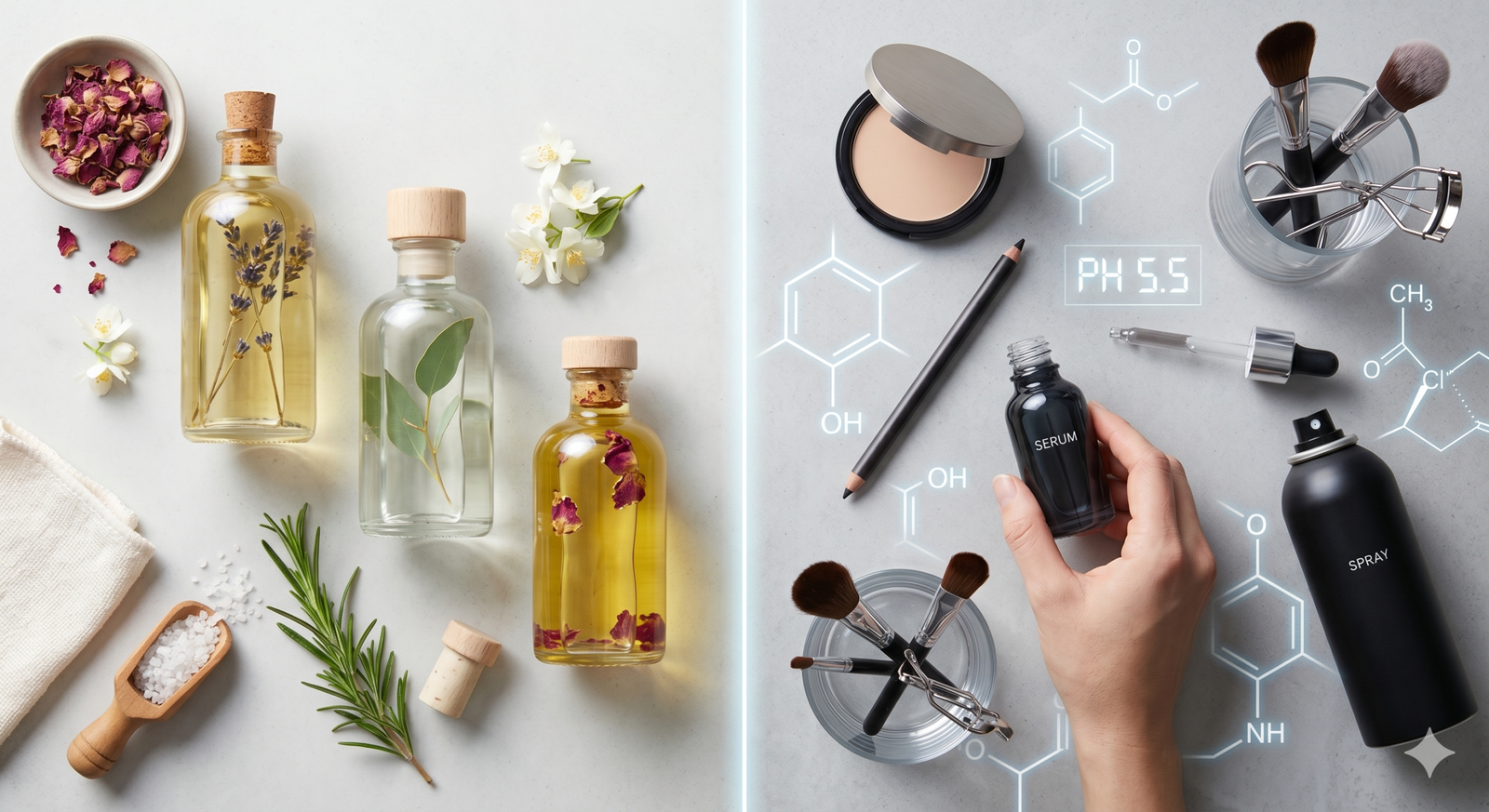
Hidden chemistry of Cosmetics: One of the most common groups of chemicals hidden in daily cosmetics is phthalates (pronounced thal-ates). In the manufacturing world, these are used as “plasticizers” or stabilizers.
- Where they hide: They are primarily used to make product scents last longer on your skin or to keep hairsprays and nail polishes flexible.
- The Label Loophole: You will rarely see the word “phthalate” written on a bottle. Under current labeling laws, companies can protect their proprietary scents by simply listing “Fragrance” or “Parfum.” This single word can mask hundreds of hidden chemical fixatives, most notably Diethyl Phthalate (DEP).
The Deep Biological Impact: How Phthalates Affect Your Health
Hidden chemistry of Cosmetics: Because these chemicals easily escape the product base and absorb through our skin or respiratory tract, they routinely enter our systems. Decades of medical and toxicological research have identified phthalates as potent endocrine disruptors.
When these compounds enter the bloodstream, they trick the body by mimicking, blocking, or interfering with natural hormones. Because your endocrine system acts as the “master control panel” for your entire body, disrupting it can trigger a cascade of systemic health issues:
1. Reproductive and Developmental Disruption
Hidden chemistry of Cosmetics: Hormones dictate human development. Regular exposure to specific phthalates (like DBP and DEHP) has been heavily linked by epidemiological data to reproductive issues:
- In Adults: Studies show a strong correlation between high phthalate levels and decreased fertility, lowered sperm counts, and reduced sperm motility.
- During Pregnancy: These chemicals can cross the placental barrier. High exposure during pregnancy is associated with altered fetal development and complications in child growth.
2. Chronic Illnesses and Metabolic Interference
Recent long-term health studies have looked past basic skin allergies to evaluate the systemic toll of chronic chemical absorption:
Cardiovascular Risks: Major health institutions tracking population biomonitoring data have observed that adults with consistently high levels of certain phthalates face a elevated risk of developing cardiovascular disease.
Metabolic Disruptions: Because hormones regulate how we burn calories and manage blood sugar, regular exposure to endocrine-disrupting chemicals is closely tracked alongside rising modern rates of adult obesity and Type 2 diabetes.
Preservatives and Powders: What Else to Watch For
Hidden chemistry of Cosmetics: Beyond fragrances, a standard cosmetic shelf relies heavily on other chemical compounds to extend shelf life and improve texture.
1. Parabens and Formaldehyde-Releasers
Without preservatives, a water-based cream would grow mold and bacteria within days. However, traditional preservatives like parabens are easily absorbed through the skin. Much like phthalates, parabens can mimic estrogen in the body, leading researchers to study their cumulative, long-term impact on hormonal balance.
2. Inhalation Risks with Fine Powders
Products like loose talcum powders or fine aerosol sprays present a different kind of health consideration: respiratory irritation. When fine mineral particles are inhaled daily in an enclosed bathroom, they can cause mild, chronic inflammation in the lungs over time.
Shift from Consumer Fear to Consumer Power
Hidden chemistry of Cosmetics: The goal of understanding cosmetic chemistry isn’t to make you throw away everything in your bathroom cabinets in a panic. Most of these chemicals leave the body relatively quickly once you stop using them. Instead, it’s about becoming a chemically conscious consumer.
Here are three simple, practical habits you can adopt today:
- Prioritize “Fragrance-Free”: Look for products that explicitly state they are “fragrance-free” or use natural, essential-oil-based scents rather than generic “Parfum.”
- Embrace Single-Ingredient Alternatives: For deep moisturization, simple, unrefined botanical oils—like 100% pure cold-pressed coconut oil or sweet almond oil—do a magnificent job without any hidden chemical fixatives or synthetic preservatives.
- Read the Whole Label: Look for modern brands that champion ingredient transparency, explicitly stating they are “Phthalate-Free” or “Paraben-Free.”
🏁 Conclusion
Hidden chemistry of Cosmetics: You don’t need a massive, multi-step chemical routine to care for your skin. The modern cosmetics market gives us incredible cosmetic finishes and fragrances, but it often comes at the cost of cumulative chemical exposure. By reducing the number of synthetic layers you apply daily and prioritizing ingredient transparency, you give your skin barrier—and your body’s endocrine system—the perfect environment to thrive naturally. True beauty shouldn’t require a compromise on your long-term health.
Ram Niwas Bansal
“Dedicated and highly qualified professional with a specialized focus on Cooperative Housing Society (CHS) Management and Legal Advocacy. Leveraging a strong technical background and an Indian Air Force veteran’s discipline, I provide end-to-end solutions for housing societies in Mumbai.
With a Government Diploma in Cooperation and Accountancy (GDCA) and a Diploma in Naturopathy, I bridge the gap between administrative excellence and holistic community well-being.
🚫 Educational Disclaimer
Disclaimer: The information provided in this article is strictly for educational and informational purposes to help consumers better understand cosmetic ingredient labels. It does not constitute medical advice. This article evaluates broad chemical groups based on public scientific literature and does not endorse, target, or condemn any specific commercial product or brand.
❓ Frequently Asked Questions (FAQs)
Q1: If these chemicals are risky, why aren’t they completely banned?
Ans: Regulatory frameworks vary widely across the globe. While the European Union and Canada have banned several common phthalates (like DBP and DEHP) from personal care items due to safety concerns, other regulators, like the US FDA, currently maintain that certain compounds like DEP do not have enough definitive human data to warrant an outright ban at their current low usage levels.
Q2: How can I tell if a product has phthalates if it isn’t on the label?
Ans: Look for the words “Fragrance”, “Parfum”, or “Flavor” on the back of the bottle. Due to trade secret protections, companies are allowed to mask chemical scent stabilizers under these blanket terms. If the bottle doesn’t explicitly state “Phthalate-Free,” assume it likely contains them to make the scent last longer.
Q3: Do natural or organic cosmetics actually work as well as traditional ones?
Ans: Yes! Modern green chemistry has evolved significantly. Plant-derived oils (like pure almond or coconut oil) offer exceptional moisturization, while natural alpha-hydroxy acids (AHAs) can manage skin texture and odor beautifully without the need for heavy, endocrine-disrupting chemical fixatives.