
Table of Contents
Introduction
Senior citizen community living in India is rapidly emerging as a vital social necessity. Nowadays, a significant number of senior citizens—both men and women—find themselves living in urban loneliness. Many elders have sufficient financial independence and savings, yet they face a distressing reality: there is often no one nearby to assist them during sudden emergencies, and they lack a structured environment to pass their daily time meaningfully.
To solve this social challenge, a well-planned conceptual model of community living offers accommodation, daily nutrition, primary health support, and active companionship within a safe, homely atmosphere.
The Concept of Modern Senior Living Facilities
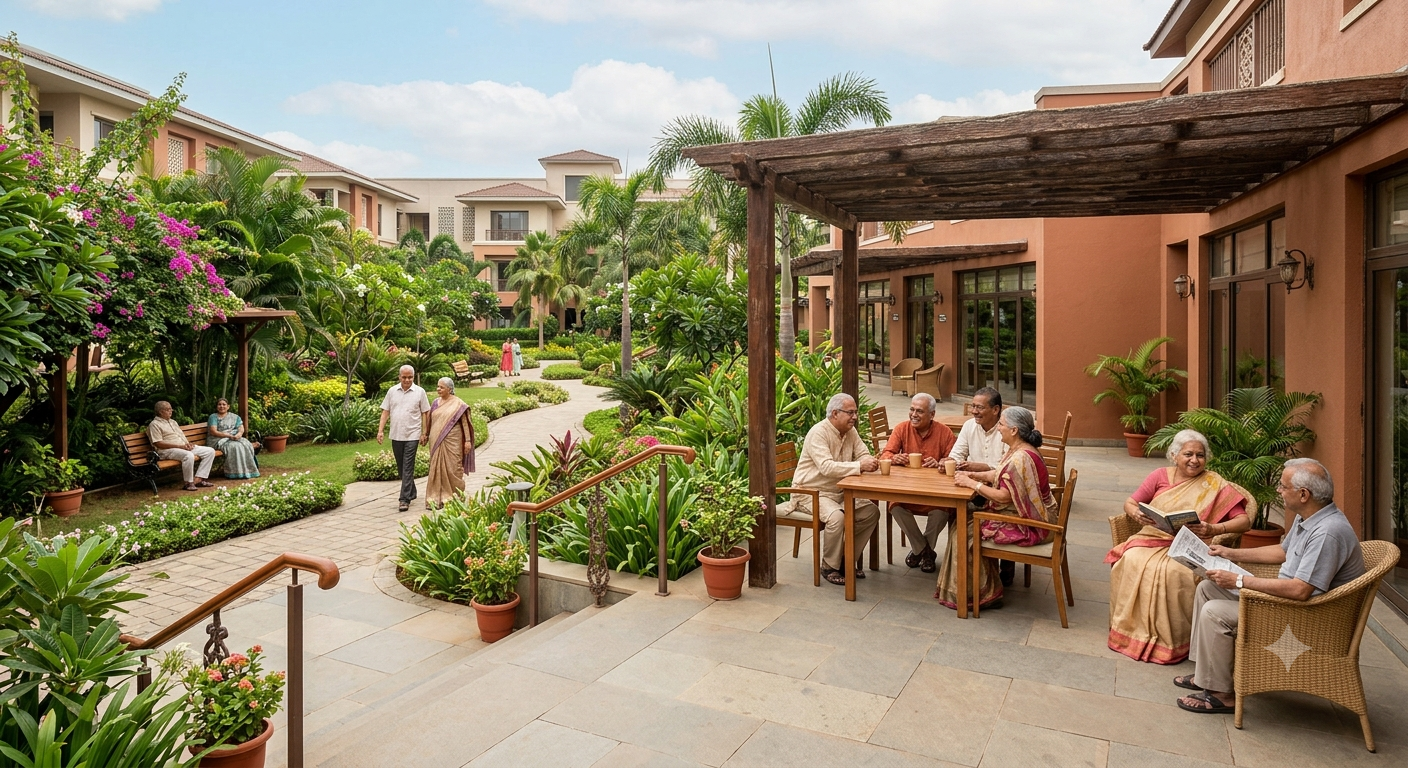
Senior citizen community living: Unlike old-fashioned traditional care homes, modern senior living communities focus on independence, dignity, and active social engagement. The core objective is to create an environment where elders feel at home while having essential operational burdens taken care of seamlessly.
A comprehensive community blueprint rests on six key infrastructural facilities:
- Flexible Living Quarters: Dormitories, single rooms, and twin-sharing rooms fitted with en-suite elder-friendly washrooms (anti-skid tiles, grab rails, and emergency pull-cords).
- Dedicated Club House: A central hub for entertainment, indoor games, library reading, cultural events, and daily social interaction.
- Hygienic Central Kitchen: Professional preparation of fresh, wholesome, and nutritionally balanced daily meals (breakfast, lunch, evening tea, and light dinner).
- Primary Health Centre: On-site consultation desk with a resident or visiting physician and 24/7 nursing attendants for emergency response.
- Housekeeping & Laundry Services: Comprehensive maintenance and linen care to relieve elders from physical chores.
- Green Open Spaces: Manicured walking tracks and quiet garden seating areas that encourage daily movement and outdoor relaxation.
Operational Structure & Daily Lifestyle
DAILY COMMUNITY ACTIVITIES
- Morning (06:30 AM – 09:00 AM): Light yoga, walking, and nutritious breakfast
- Mid-day (09:30 AM – 01:30 PM): Reading, health checkups, and central lunch
- Afternoon (01:30 PM – 04:00 PM): Rest, hobbies, and personal time
- Evening (04:00 PM – 08:30 PM): Club house activities, group discussions,
- Garden Strolls & Dinner
Essential Staffing Architecture
Senior citizen community living: A self-sustained community operates through a multi-tiered support structure:
- Administrative Management: Community coordinator overseeing daily operations, billing, and resident well-being.
- Clinical Team: Visiting doctor, round-the-clock staff nurses, and on-call physiotherapists.
- Utility & Care Staff: Dedicated cooks, kitchen assistants, laundry personnel, housekeeping, and security guards.
Regulatory Framework & Industry Presence in India
Senior citizen community living: The market for structured senior housing in India is expanding rapidly, with established groups like Columbia Pacific Communities and Ashiana Housing developing purpose-built retirement housing models.
Key Legal & Compliance Checklist
Senior citizen community living: Setting up or evaluating a senior living venture requires strict adherence to regulatory standards:
- Entity Formation: Operating under a Public Charitable Trust, Society, or Section 8 entity (or a specialized corporate venture).
- Social Welfare Compliance: Registration with state social welfare authorities under the Maintenance and Welfare of Parents and Senior Citizens Act.
- Safety & Municipal Clearances: Building Occupancy Certificates (OC), Fire Department NOCs, and FSSAI licensing for central kitchens.
- Minimum Operational Standards: Adherence to government guidelines for elder care facilities, including barrier-free access, 24/7 emergency response systems, and mandatory staff background verifications.
Conclusion
Senior citizen community living in India represents a transformation in how society approaches elder wellness, independence, and care. By bringing together comfortable living spaces, on-site primary healthcare, daily chore management, and social engagement, these communities replace urban isolation with security and companionship. As urban lifestyles continue to evolve, structured community living offers senior citizens the dignity, care, and peaceful post-retirement environment they truly deserve.
Ram Niwas Bansal
“Dedicated and highly qualified professional with a specialized focus on Cooperative Housing Society (CHS) Management and Legal Advocacy. Leveraging a strong technical background and an Indian Air Force veteran’s discipline, I provide end-to-end solutions for housing societies in Mumbai.
With a Government Diploma in Cooperation and Accountancy (GDCA) and a Diploma in Naturopathy, I bridge the gap between administrative excellence and holistic community well-being.
Disclaimer
Senior citizen community living in India: The operational models, infrastructural suggestions, and regulatory references discussed in this article are provided for conceptual, informational, and educational purposes only. They do not constitute formal real estate, medical, or legal advice. Anyone planning to establish, invest in, or join a senior living community should conduct independent legal, financial, and regulatory due diligence with qualified experts.
Frequently Asked Questions (FAQs)
Q1. What is senior citizen community living in India?
Senior citizen community living in India refers to residential housing facilities designed specifically for older adults. These communities provide independent or assisted accommodations combined with healthcare services, central dining, housekeeping, and social amenities in a secure environment.
Q2. How does senior community living differ from traditional old-age homes?
Traditional old-age homes often cater primarily to destitute elders or those needing basic shelter. Modern senior living communities are premium, facility-rich residential complexes designed for active retirees seeking an upgraded lifestyle, medical peace of mind, professional maintenance, and active peer engagement.
Q3. What are the key health and safety features required in a senior community?
Essential safety features include 24/7 on-duty nursing staff, emergency call bells/pull-cords in bedrooms and washrooms, anti-skid flooring, wheelchair accessibility, tie-ups with nearby multi-specialty emergency hospitals, and gated security.
Good
Thank you Mr Shrikant Murarka ji