
Table of Contents
Introduction
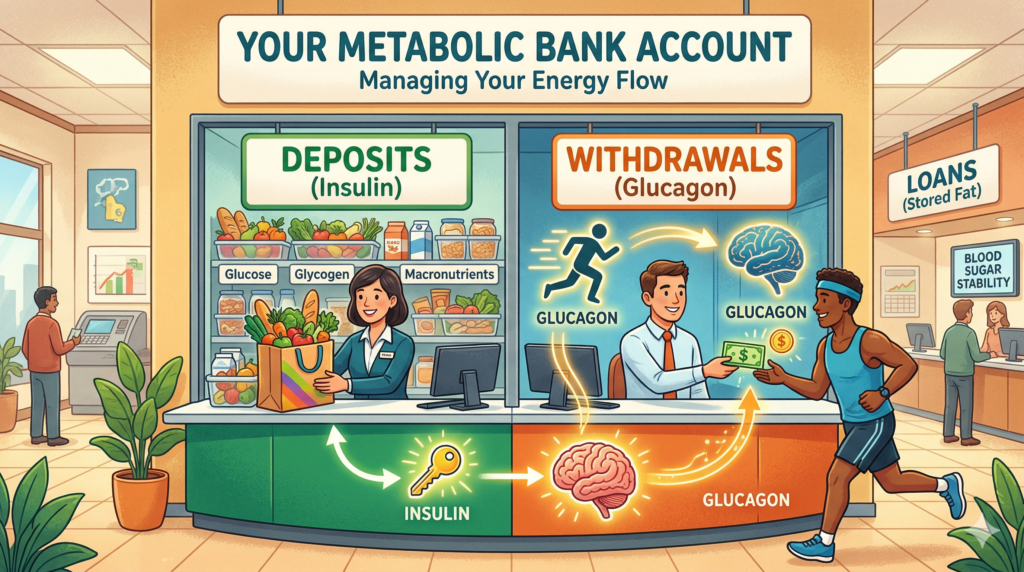
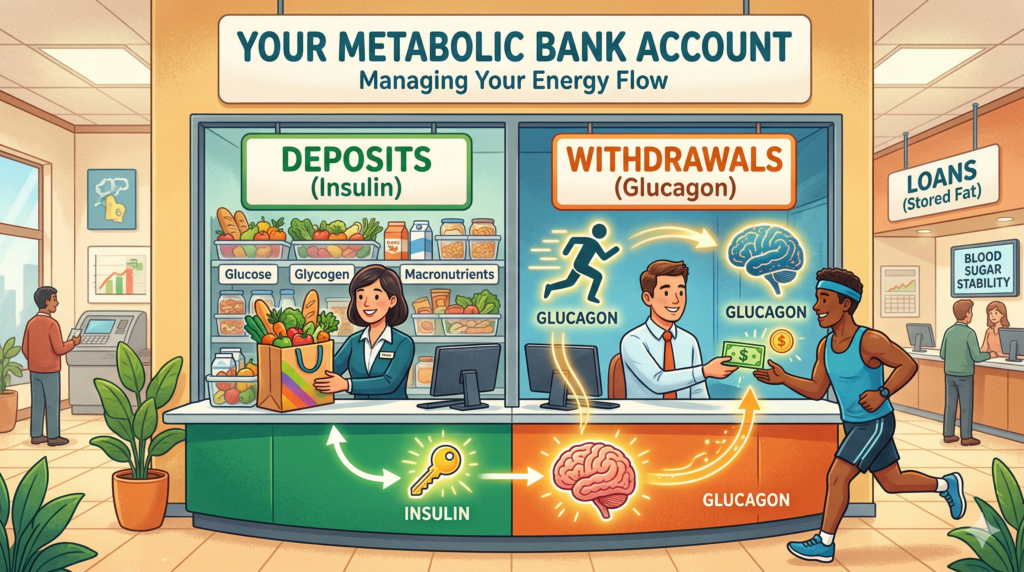
Your body’s blood glucose regulation works remarkably like a high-stakes bank account. Instead of dollars, the currency is glucose—the primary fuel for your brain, muscles, and organs. To keep this “business” solvent, your body employs two specialized clerks: insulin and glucagon.
Maintaining a steady balance isn’t just about avoiding a “crash”; it’s about metabolic efficiency. When these two hormones are in sync, you experience steady energy, mental clarity, and easier weight management. When they are out of sync, the “bank” faces a crisis.
The Bank Analogy: Deposits, Withdrawals, and Balance
Picture your bloodstream as a bustling bank branch. After you eat, a “paycheck” of carbohydrates enters the system. Without a management strategy, your body would face chaos: either a surplus of cash leading to “inflation” (hyperglycemia) or an empty vault (hypoglycemia). In this article we will understand blood glucose regulation with a simple bank account analogy.
The Deposit Slip: Insulin
Blood Glucose Regulation: Immediately following a meal, your blood sugar rises. This signals the pancreas (specifically the beta cells) to release insulin. Think of insulin as the deposit form. Its job is to:
- Open the Vault: It unlocks cell membranes, allowing glucose to move from the blood into the cells.
- Fill the Savings Account: It converts excess glucose into glycogen, stored in the liver and muscles for quick access.
- Long-term Investing: When the glycogen “accounts” are full, insulin directs the remaining energy into adipose tissue (fat) for long-term storage.
The Withdrawal Form: Glucagon
Blood Glucose Regulation: A few hours after eating, your blood sugar begins to dip. This is when the alpha cells in the pancreas issue glucagon, the withdrawal form. Glucagon ensures your “account” never hits zero by:
- Glycogenolysis: Signaling the liver to “cash out” stored glycogen back into glucose.
- Gluconeogenesis: In more extended fasts, it helps the body manufacture new glucose from non-carbohydrate sources like fats and proteins.
Why the “Always Open” Policy Fails
Our biology evolved for a “feast and famine” cycle. However, modern habits of constant snacking keep the bank in a perpetual state of insulin dominance. When you never stop depositing, the “withdrawal” clerk (glucagon) never gets to work. This leads to insulin resistance, where the cells stop responding to the deposit slips, leaving glucose to sit in the blood where it can cause inflammatory damage.
Key Fact (Blood Glucose Regulation): Homeostasis is typically maintained between 70-100 mg/dL. To stay in this “sweet spot,” your body must alternate between storing energy and burning it.
Practical Strategies: Optimize Your Metabolic Bank
To keep your metabolic clerks working efficiently, you must respect the natural rhythm of deposits and withdrawals (Blood Glucose Regulation).
1. Honor the Meal Cycle
Constant grazing prevents glucagon from ever being “hired.” Aim for meal spacing of 4–6 hours. By giving your body an 12–14 hour overnight fast (e.g., finishing dinner by 6 PM and eating breakfast at 8 AM), you allow glucagon to reign supreme during the night, cleaning out old stores and burning fat.
2. Strategic Meal Composition
Not all deposits are processed at the same speed. To avoid a massive spike that overwhelms your “tellers,” follow this order:
- Fiber and Protein First: These act as a “security guard,” slowing down the absorption of sugar.
- Complex Carbs Last: Focus on low-glycemic foods like legumes and oats to ensure a slow, steady deposit rather than a volatile surge.
3. Move to Mimic Withdrawals
Exercise is the ultimate metabolic hack. Physical activity allows muscles to bypass the need for insulin entirely through a process called GLUT4 translocation. A simple 15-minute walk after a meal acts like an “express withdrawal,” clearing glucose from the blood and improving insulin sensitivity by up to 20-30%.
Prioritize “System Maintenance” (Sleep & Stress)
When you are chronically stressed or sleep-deprived, your body releases cortisol. Cortisol acts like an unauthorized withdrawal—it floods the blood with glucose even if you haven’t eaten, forcing insulin levels to stay high and blocking fat burning. Aim for 7–9 hours of quality sleep to keep your hormonal clerks in balance.
Summary Table: Insulin vs. Glucagon
| Feature | Insulin (The Depositor) | Glucagon (The Withdrawer) |
|---|---|---|
| Trigger | High blood sugar (Post-meal) | Low blood sugar (Fasting/Exercise) |
| Primary Goal | Lower blood glucose / Store energy | Raise blood glucose / Use energy |
| Storage Form | Glycogen & Fat | Glucose (released from stores) |
| Metabolic State | Anabolic (Building) | Catabolic (Breaking down) |
By treating your nutrition and movement as a way to manage your “Metabolic Bank,” you ensure that you always have the energy you need without the “debt” of metabolic disease.
Conclusion: Balancing Your Bio-Budget
Mastering your blood glucose regulation isn’t about avoiding “deposits” (carbohydrates) entirely; it’s about ensuring your body remains “liquid” enough to handle “withdrawals” (fat burning) when needed. By honoring the natural rhythm between insulin and glucagon, you move away from the cycle of energy crashes and constant hunger.
When you prioritize meal spacing, fiber-rich nutrition, and consistent movement, you train your “metabolic bank” to be resilient. This hormonal harmony is the ultimate foundation for long-term health, mental clarity, and sustainable energy levels.
Ram Niwas Bansal
“Dedicated and highly qualified professional with a specialized focus on Cooperative Housing Society (CHS) Management and Legal Advocacy. Leveraging a strong technical background and an Indian Air Force veteran’s discipline, I provide end-to-end solutions for housing societies in Mumbai.
With a Government Diploma in Cooperation and Accountancy (GDCA 2024) and a Diploma in Naturopathy, I bridge the gap between administrative excellence and holistic community well-being.
Disclaimer
Important Note: The information provided in this post, including the bank analogy and metabolic strategies, is for educational and informational purposes only. It is not intended as medical advice or a substitute for professional consultation with a healthcare provider or a registered dietitian.
If you are managing a metabolic condition such as Type 1 or Type 2 Diabetes, PCOS, or insulin resistance, or if you are taking medication to regulate blood sugar, please consult your doctor before making significant changes to your diet, fasting routine, or exercise program. Always listen to your body and prioritize professional medical guidance for your specific health needs.