
Table of Contents
Introduction
Vipassana Meditation Gorai: In a world filled with constant notifications, endless screen time, and non-stop noise, taking a complete step back can sound almost radical. Yet, that is precisely what led me to sign up for a 10-day Vipassana meditation retreat at the Global Vipassana Pagoda in Gorai, Borivali (West).
From September 16 to September 27, 2026, I unplugged completely—no phone, no talking, no dinner, and nearly 12 hours of meditation every single day. Here is my personal story, detailing what the stay was like, how my body adapted to physical pain, and the life lessons I took away.
Introduction to Global Vipassana Pagoda, Gorai
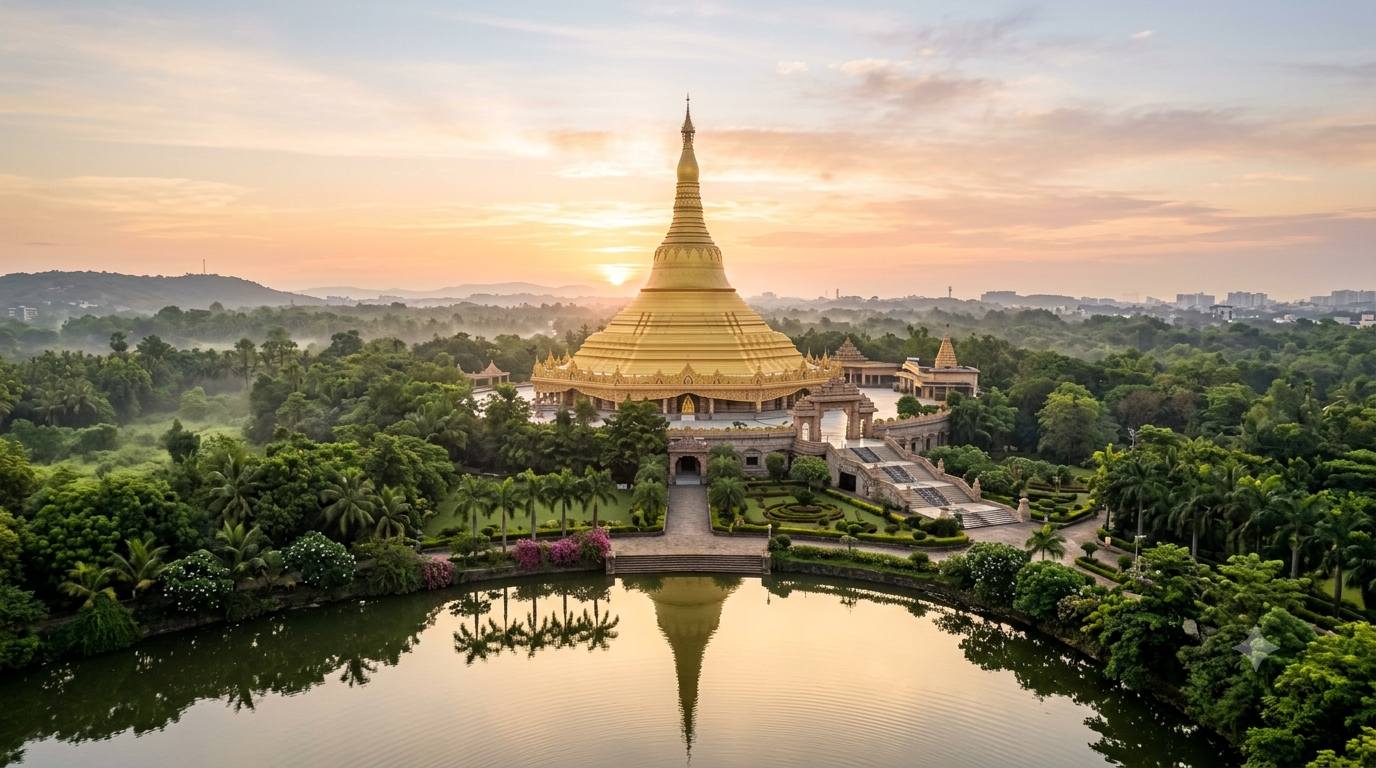
Vipassana Meditation Gorai: Located on a peaceful peninsula between the Gorai Creek and the Arabian Sea in Borivali (West), Mumbai, the Global Vipassana Pagoda is a architectural marvel and a global monument of peace. Modeled after Myanmar’s Shwedagon Pagoda, it houses the world’s largest stone dome built without supporting pillars.
Inside this magnificent structure lies a sanctuary dedicated to teaching Vipassana—an ancient Indian technique of self-observation taught by Gautama Buddha over 2,500 years ago, reintroduced in modern times by Principal Teacher Shri S. N. Goenka ji. The center offers a pristine, natural environment designed specifically to support deep meditation and mental quietude.
Arrival & Facilities: What to Expect On-Site
Vipassana Meditation Gorai: I arrived at the Pagoda premises around 3:00 PM on September 16. The initial onboarding process was incredibly well-organized and welcoming.
- Accommodation: I was allotted a single private air-conditioned room, offering a quiet space to rest without distractions.
- Meditation Setup: Each participant receives a dedicated cushion in the main meditation hall and an individual meditation cell (shunya agaar) for solitary practice.
- Dining Facilities: You are assigned a fixed seating arrangement in the dining hall to ensure smooth, silent mealtimes.
- Laundry System: An efficient laundry service is provided. You simply attach a laundry token to your bundle of clothes and drop them at the designated counter; by the next morning, your washed and ironed clothes are ready for pickup.
- Dhamma Server Assistance: Noble Silence means no spoken communication. However, if you need anything—from extra bedding to basic amenities—you write your room number and request on paper slips provided near the counter, and the Dhamma Servers (volunteers) attend to it promptly.
Healthy Dining and Daily Meals
Vipassana Meditation Gorai: The food provided throughout the 10 days was completely vegetarian, clean, nutritious, and suited to support long hours of sitting.
- Breakfast (6:30 AM): Unlimited healthy breakfast items served along with tea, milk, kadha & fruits.
- Lunch (11:00 AM): A balanced Indian meal offering plenty of variety (2 vegetables, dal/kadhi, plain rice & pulav, 2 types of chapatis, soup, salad, stir-fried vegetables, curd/buttermilk/raita) health benefits, and good taste.
- Evening Snacks (5:00 PM): Light options such as milk, tea, kadha, puffed rice (murmura), and fresh fruits.
After 5:00 PM, no solid meal is served, allowing the body to digest lightly and prepare for evening meditation sessions.
My Daily Schedule at the Retreat: Vipassana Meditation Gorai
| Time | Activity |
|---|---|
| 4:00 AM | Wake-up bell, freshen up, and take a shower |
| 4:30 AM – 5:15 AM | Light yoga exercises and gentle stretching |
| 5:15 AM – 6:30 AM | Morning Meditation session |
| 6:30 AM – 7:15 AM | Breakfast followed by a short morning walk |
| 8:00 AM – 11:00 AM | Scheduled Meditation sessions |
| 11:00 AM – 1:00 PM | Healthy Lunch, 10-15 min gentle walk, Vajrasana (10 mins), and Shavasana (15 mins) followed by short rest |
| 1:00 PM – 5:00 PM | Afternoon Meditation sessions |
| 5:00 PM – 6:00 PM | Evening Tea/Snacks and relaxation time |
| 6:00 PM – 7:00 PM | Evening Meditation session |
| 7:00 PM – 8:30 PM | Daily Discourse video lecture by Guruji Shri S. N. Goenka ji |
| 8:30 PM – 9:00 PM | Night Meditation session |
| 9:30 PM | Sleep / Lights out |
Physical Healing: Overcoming Posture and Joint Pain
Vipassana Meditation Gorai: The physical adjustment during the first few days was one of my biggest hurdles:
- Days 1–2: Sitting cross-legged for hours was tough. I could barely keep my posture straight for 5 minutes without discomfort.
- Day 3: My flexibility improved gradually, allowing me to sit comfortably in a cross-legged position for much longer stretches.
- Day 5: I noticed significant relief from chronic knee, neck, shoulder, and upper back discomfort.
- Day 7: The pain was almost entirely gone! Combining deep mindfulness with light morning stretches, gentle yoga, and post-meal postures like Vajrasana gave me a surge of physical energy.
During this process of self-observation, I realized that my upper back and shoulder issues stemmed largely from bad habits back home—specifically poor posture while using my mobile phone for extended periods.
Insights from Shri S. N. Goenka Ji’s Discourses
Vipassana Meditation Gorai: Every evening at 7:00 PM, we gathered to watch recorded video discourses by Shri S. N. Goenka ji. These talks provided profound clarity on human behavior, conditioning, and the subconscious mind. Two concepts stood out to me:
1. Why Do Children Throw Temper Tantrums?
Before birth, every single need of an infant is satisfied effortlessly inside the womb. The moment the umbilical cord is cut, that constant supply stops, causing the newborn physical discomfort. Instinctively, the baby cries and starts breathing.
When the baby cries, the mother nurses or comforts them, alleviating the discomfort. Through repetition, the child’s subconscious mind quickly learns a formula: When I experience discomfort or an unmet desire, crying restores comfort. This early conditioning explains why children naturally cry or become stubborn (ziddi) when their desires aren’t immediately met.
2. Emotional Conditioning Across Genders
As children grow older, societal conditioning alters how boys and girls handle distress. Young boys are frequently told, “You shouldn’t cry; be strong; men don’t cry.” Over time, their subconscious suppresses emotional tears.
In contrast, girls are rarely conditioned with this expectation, allowing their subconscious mind to retain crying as a primary mechanism for releasing emotional distress throughout adulthood.
Conclusion
Vipassana Meditation Gorai: On the 11th morning at 6:30 AM, our course officially ended. After enjoying a final breakfast at the center, I began my journey back home.
Stepping out of the 9 days of complete silence, away from digital screens and daily stress, proved to be a transformative experience. My body felt pain-free, my mind felt lighter, and I gained a deeper understanding of my mental habits. If you ever feel the urge to reset your mind and body, taking on the Vipassana Meditation Gorai experience is a decision well worth making.
Ram Niwas Bansal
“Dedicated and highly qualified professional with a specialized focus on Cooperative Housing Society (CHS) Management and Legal Advocacy. Leveraging a strong technical background and an Indian Air Force veteran’s discipline, I provide end-to-end solutions for housing societies in Mumbai.
With a Government Diploma in Cooperation and Accountancy (GDCA) and a Diploma in Naturopathy, I bridge the gap between administrative excellence and holistic community well-being.
Disclaimer
Vipassana Meditation Gorai: This blog post reflects the personal experience, reflections, and health observations of the author during a 10-day Vipassana meditation course. It is intended for informational and inspirational purposes only and should not be taken as medical, psychological, or professional advice. Course structures and rules may vary; please refer to the official Global Vipassana Pagoda guidelines for current details.
Frequently Asked Questions (FAQs)
1. How do I apply for a Vipassana course at Gorai Pagoda?
You can apply online through the official Global Vipassana Pagoda website or the Dhamma.org portal. Due to high demand, it is best to apply a few months in advance.
2. Are private rooms available for all participants?
Room allocations depend on availability and specific course arrangements. While many participants receive individual rooms (some AC units are available depending on season and block), shared accommodations are also common.
3. What is the fee for attending a 10-day Vipassana course?
All Vipassana courses run purely on a donation basis. There are no fixed fees for food, accommodation, or teaching. At the end of your course, you may leave a voluntary donation according to your means to help future students.
4. Can beginners participate in a 10-day Vipassana course?
Yes, 10-day courses are specifically structured for beginners as well as returning students. The gradual daily structure helps first-timers adapt step-by-step.