
Table of Contents
Introduction
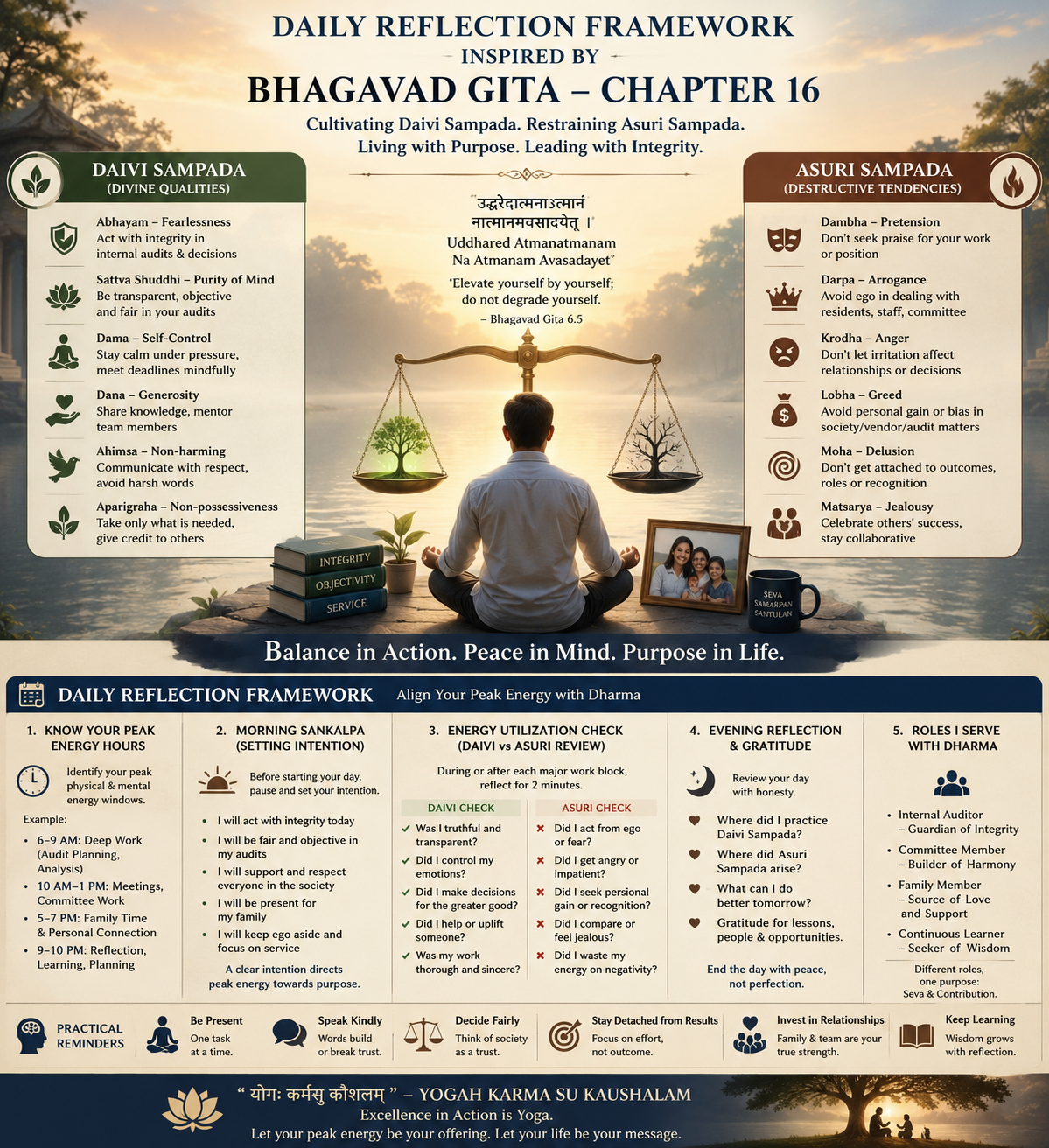
Bhagavad Gita Chapter 16: Why do some people use their physical health, mental sharpness, and financial wealth to uplift society, while others use the exact same resources to control, manipulate, or trouble those around them? This fundamental question about human nature is not new. Thousands of years ago, on the battlefield of Kurukshetra, Sri Krishna addressed this exact polarity of human behavior.
In Bhagavad Gita Chapter 16, titled Daivasura Sampad Vibhaga Yoga, the text explicitly divides human traits into two distinct categories: Daivi Sampada (Divine Qualities) and Asuri Sampada (Demonic or Regressive Qualities).
Understanding this chapter provides a powerful blueprint for how we should utilize our personal energy, fitness, and material resources in modern daily life.
The Core Blueprint of Bhagavad Gita Chapter 16
The entire premise of Bhagavad Gita Chapter 16 revolves around behavior and intent. Resources like a healthy body or a wealthy bank account are inherently neutral. They act purely as amplifiers of an individual’s underlying inner nature.
1. Daivi Sampada: The Path of Upliftment and Service
In the opening verses of this chapter, Sri Krishna lists virtues that represent the highest state of human consciousness. When a person possesses a divine nature, any strength they have—whether it is physical wellness or intellectual capability—is channeled into constructive actions.
तेजः क्षमा धृतिः शौचमद्रोहो नातिमानिता ।
भवन्ति सम्पदं दैवीमभिजातस्य भारत ॥
Key attributes include:
- Tejah (Dynamism and Energy): Using vital energy to build, create, and inspire.
- Adroho (Absence of Malice): A conscious choice to never use one’s position or strength to harass, disturb, or intentionally trouble others.
- Kshama (Forgiveness) and Dhriti (Fortitude): Remaining grounded, patient, and helpful even when circumstances are challenging.
When your health permits, a divine mindset naturally directs you toward supporting your society / family, managing structural responsibilities, or engaging in creative professional projects.
2. Asuri Sampada: The Pitfall of Ego and Misuse of Power
Conversely, Bhagavad Gita Chapter 16 warns against the regressive traits that develop when material success or physical strength is disconnected from spiritual wisdom.
Verse 18 perfectly captures this behavioral trap:
अहंकारं बलं दर्पं कामं क्रोधं च संश्रिताः ।
मामात्मपरदेहेषु प्रद्विषन्तोऽभ्यसूयकाः ॥
Translation: Given over to self-conceit, brute force, arrogance, lust, and anger, these malicious people abuse Me (the Divine Presence) dwelling within their own bodies and in the bodies of others.
When individuals operate from this mindset, an abundance of physical health or societal authority is frequently misdirected into arrogance (Darpa) and dominance (Balam). Instead of creating harmony, their vital energy is spent creating friction, asserting dominance, or seeking temporary, self-centered sensory enjoyments at the cost of peace within their household or workplace.
Applying Verse 16 to Modern Challenges
How do we apply the timeless wisdom of Bhagavad Gita Chapter 16 today? It begins with an honest audit of how we react when we are at our physical and financial peak.
How do we apply the timeless wisdom of Bhagavad Gita Chapter 16 today? It begins with an honest audit of how we react when we are at our physical and financial peak.
| Resource Type | The Regressive Path (Asuri) | The Constructive Path (Daivi) |
|---|---|---|
| Physical Health & Vitality | Wasting energy solely on fleeting external distractions; creating emotional distress or micro-managing family members. | Assisting with household / society responsibilities, offering physical service, and focusing on creative endeavors. |
| Intellectual & Digital Skills | Criticizing others, winning arguments for ego satisfaction, or generating negative digital footprints. | Developing educational content, solving administrative issues, and pursuing structured learning. |
| Wealth & Financial Assets | Flaunting status to make others feel inferior; using financial power to control relationships. | Contributing to community welfare, building sustainable systems, and ensuring family stability. |
Conclusion
Ultimately, Bhagavad Gita Chapter 16 serves as a mirror for our daily intentions. Health and wealth are fleeting instruments of the material world. True strength does not lie in how effectively we can dominate or disrupt our immediate environment when we feel powerful. True strength lies in practicing Adroho—ensuring that our vitality is consistently used to ease the burdens of others, nurture our families, and contribute something genuinely creative to the world.
Ram Niwas Bansal
“Dedicated and highly qualified professional with a specialized focus on Cooperative Housing Society (CHS) Management and Legal Advocacy. Leveraging a strong technical background and an Indian Air Force veteran’s discipline, I provide end-to-end solutions for housing societies in Mumbai.
With a Government Diploma in Cooperation and Accountancy (GDCA) and a Diploma in Naturopathy, I bridge the gap between administrative excellence and holistic community well-being.
Disclaimer: The interpretations provided in this article are intended solely for educational, philosophical, and self-reflective purposes. They offer general insights into ancient text dynamics and should not be substituted for professional psychological, relational, or medical advice.
Frequently Asked Questions (FAQ)
What is the main message of Bhagavad Gita Chapter 16?
The main message is that every human being possesses a mix of divine (Daivi) and regressive (Asuri) tendencies. The chapter urges individuals to actively cultivate virtues like humility, self-control, and harmlessness while abandoning pride, anger, and the desire to control others.
How does the Gita define the misuse of strength?
According to Verse 16.18, when physical or social strength (Balam) is combined with ego (Ahaṅkāra) and arrogance (Darpa), it leads to malicious behavior. Such individuals end up causing mental or physical distress to themselves and those around them, disregarding the divine spark within everyone.
Why is freedom from malice (Adroho) considered a divine quality?
Adroho means having no desire to injure or trouble others. It is considered divine because it requires immense mental maturity and emotional stability to have the power to cause trouble, but consciously choosing to use that same power for peace, household harmony, and productivity instead.
Pingback: Ghar Ka Kalesh Aur Mental Stress: Jab 1 Chhoti Baat Big Lage