
Table of Contents
Introduction
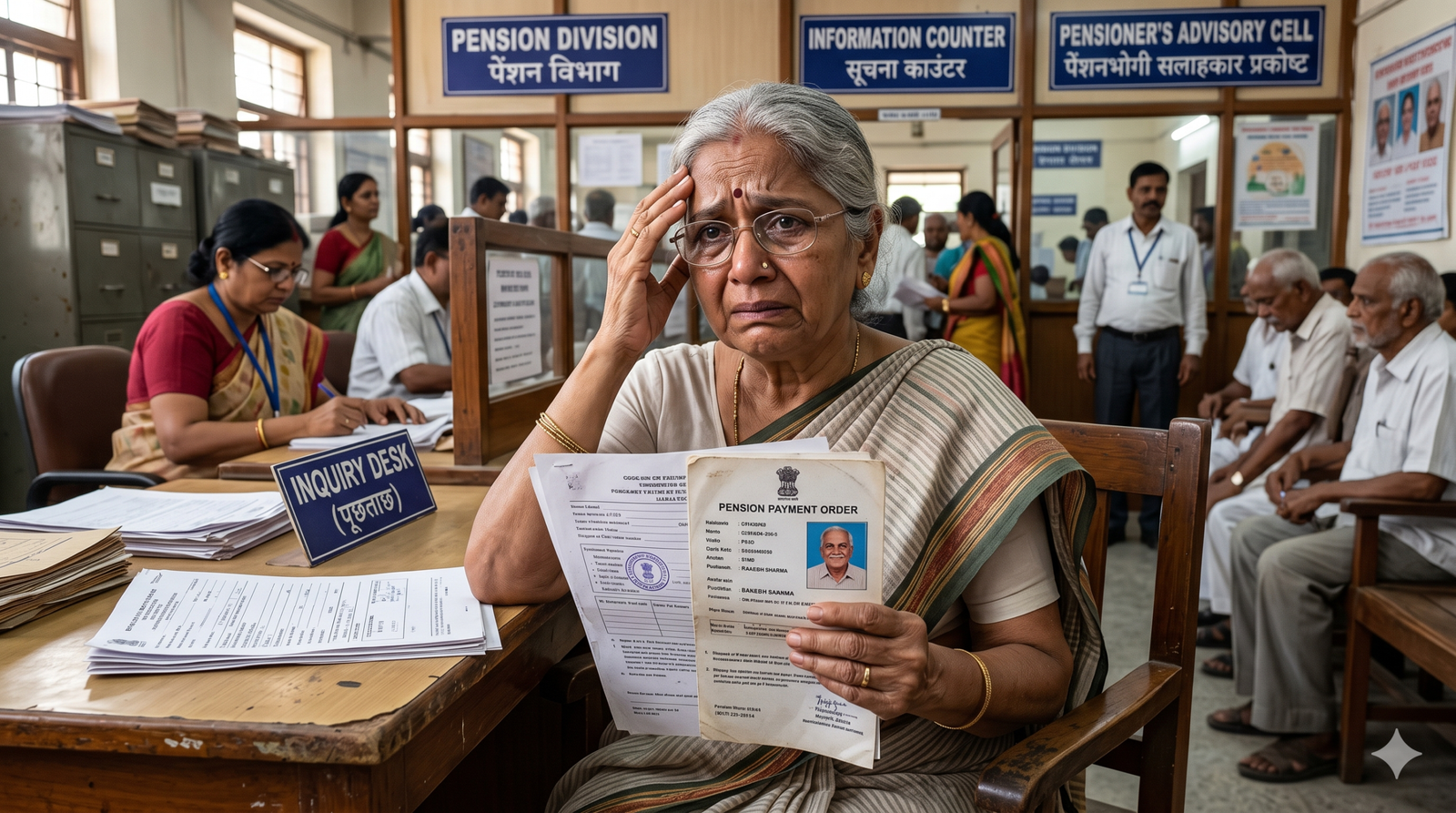
Missing Pensioner Family Pension: Some life questions seem uncommon until they become a real concern. One such important question is: What happens if a retired pensioner goes missing and is unable to submit the annual life certificate? How will the wife survive, and when can she receive pension benefits?
Many people assume the family must wait seven years. However, the practical position is often different.
What Is a Life Certificate?
A life certificate is an annual confirmation submitted by pensioners to prove they are alive so that pension payments can continue without interruption.
If the certificate is not submitted, pension payments may be temporarily stopped or placed on hold.
What Should the Family in case of Missing Pensioner Family Pension?
If a pensioner suddenly goes missing, the family should act immediately.
Immediate Steps
- File a missing person complaint or FIR with the police.
- Inform the pension-paying bank or pension authority in writing.
- Keep the Pension Payment Order (PPO) ready.
- Submit the spouse’s identity proof and bank details.
- Apply for family pension as per applicable rules.
Is It Necessary to Wait for Seven Years?
This is the most common misunderstanding.
Under Indian law, the seven-year concept is generally related to the legal presumption of death when a person has not been heard from for seven years. However, this does not always mean that the wife must wait seven years to receive family pension in case of missing pensioner family pension.
Many pension systems have separate provisions for missing pensioners, allowing family pension to begin earlier after due verification and required documentation.
What About Defence Pension Cases?
In defence pension matters, there are provisions designed to provide relief to the spouse of a missing pensioner family pension.
Based on police reports, official records, and required documents, family pension may be processed according to the applicable defence pension rules.
The exact process may depend on the service branch, PPO type, record office, or whether the pension is managed through SPARSH or another system.
Common Documents Required
The following documents are commonly useful for missing pensioner family pension:
- Copy of missing FIR or complaint
- PPO copy
- Aadhaar or identity proof
- Marriage proof
- Bank passbook or account details
- Passport-size photographs
- Application letter
- Indemnity bond (if required)
Final Conclusion: Missing Pensioner Family Pension
If a pensioner goes missing, the family does not always need to remain helpless or wait indefinitely. With timely action, proper documentation, and an application to the concerned authority, the wife may claim family pension subject to the applicable pension rules.
Disclaimer
This article is for educational and general awareness purposes only. Rules may differ for Central Government, State Government, Defence, Bank, EPS, or other pension systems. Please verify with the concerned pension authority or a qualified legal professional before taking action.
FAQs: Missing Pensioner Family Pension
Q1. What happens if a pensioner fails to submit the life certificate?
If a pensioner does not submit the annual life certificate, the pension may be temporarily stopped or put on hold. However, if the family informs the authorities that the pensioner is missing, the case is treated differently and further action can be initiated.
Q2. Can the wife receive family pension if the pensioner is missing?
Yes, in many cases the wife can apply for family pension if the pensioner is officially reported missing. The claim is processed based on verification, documents, and applicable pension rules.
Q3. Is it mandatory to wait for 7 years to receive family pension?
No, it is not always mandatory. The 7-year rule applies to legal presumption of death, but family pension in missing cases may be granted earlier depending on the rules and verification process.
Q4. How long does it take to start family pension in missing cases?
The timeline may vary depending on the pension authority and type of pension (Defence, Central Government, etc.). In many cases, the process can begin within months after proper documentation and verification.
Q5. What documents are required to claim family pension in such cases?
Common documents include:
Police FIR or missing complaint
Pension Payment Order (PPO)
Identity proof of the spouse
Marriage certificate or proof
Bank account details
Photographs
Indemnity bond (if required)
Q6. What is the role of the police report in such cases?
A police report or FIR is crucial as it officially establishes that the pensioner is missing. It is one of the primary documents required to initiate the family pension process.
Q7. What is the difference between missing status and legal death?
A missing status means the person cannot be traced, while legal death is presumed after 7 years of no information. Pension rules may allow benefits to the family even before legal death is declared.
Q8. Can pension arrears be claimed later if the pensioner is declared dead?
Yes, depending on the rules and outcome of the case, pending dues or arrears may be claimable by the legal heirs after completion of formalities.
Q9. Does the process differ for Defence and Government pensioners?
Yes, the process and timelines may differ depending on whether the pension is from Defence, Central Government, State Government, or other systems. Each has its own procedures and authorities.
Q10. Can the process be done online?
In some cases, especially for Defence pensions managed through digital systems like SPARSH, parts of the process may be initiated online. However, documentation and verification are still essential.
Ram Niwas Bansal
“Dedicated and highly qualified professional with a specialized focus on Cooperative Housing Society (CHS) Management and Legal Advocacy. Leveraging a strong technical background and an Indian Air Force veteran’s discipline, I provide end-to-end solutions for housing societies in Mumbai.
With a Government Diploma in Cooperation and Accountancy (GDCA 2024) and a Diploma in Naturopathy, I bridge the gap between administrative excellence and holistic community well-being.