
Table of Contents
Introduction
Natural process of rain water transportation is something we see almost every year, but have you ever paused to ask yourself: What is rain?
At its absolute core, rain is the grand, divine water supply system of nature. When God created this beautiful Shristi (universe), He populated it with millions of different living creatures, towering trees, delicate plants, and vast ecosystems. Every single one of these living expressions needs water to exist. Without water, life on Earth is impossible. But how do you reach a thirsty seed buried deep in a mountain soil, or a massive forest far away from any river?
To solve this, the Creator built the ultimate, automated delivery network. God designated the vast Sea as nature’s permanent, giant water storage tank—a grand reservoir holding the lifeblood of the planet. Then, to distribute it, God created the natural process of rain as a cosmic water distribution pipeline. It taps into this massive oceanic storage, lifts the water, purifies it, and pumps it across continents to ensure that no creature is left thirsty and that life can be sustained in every corner of the planet.
We look outside and casually say, “Oh, it’s raining today.” But if you look closer, it isn’t just weather. It is a massive, completely automated mega-system that runs flawlessly over thousands of miles without a single human employee.
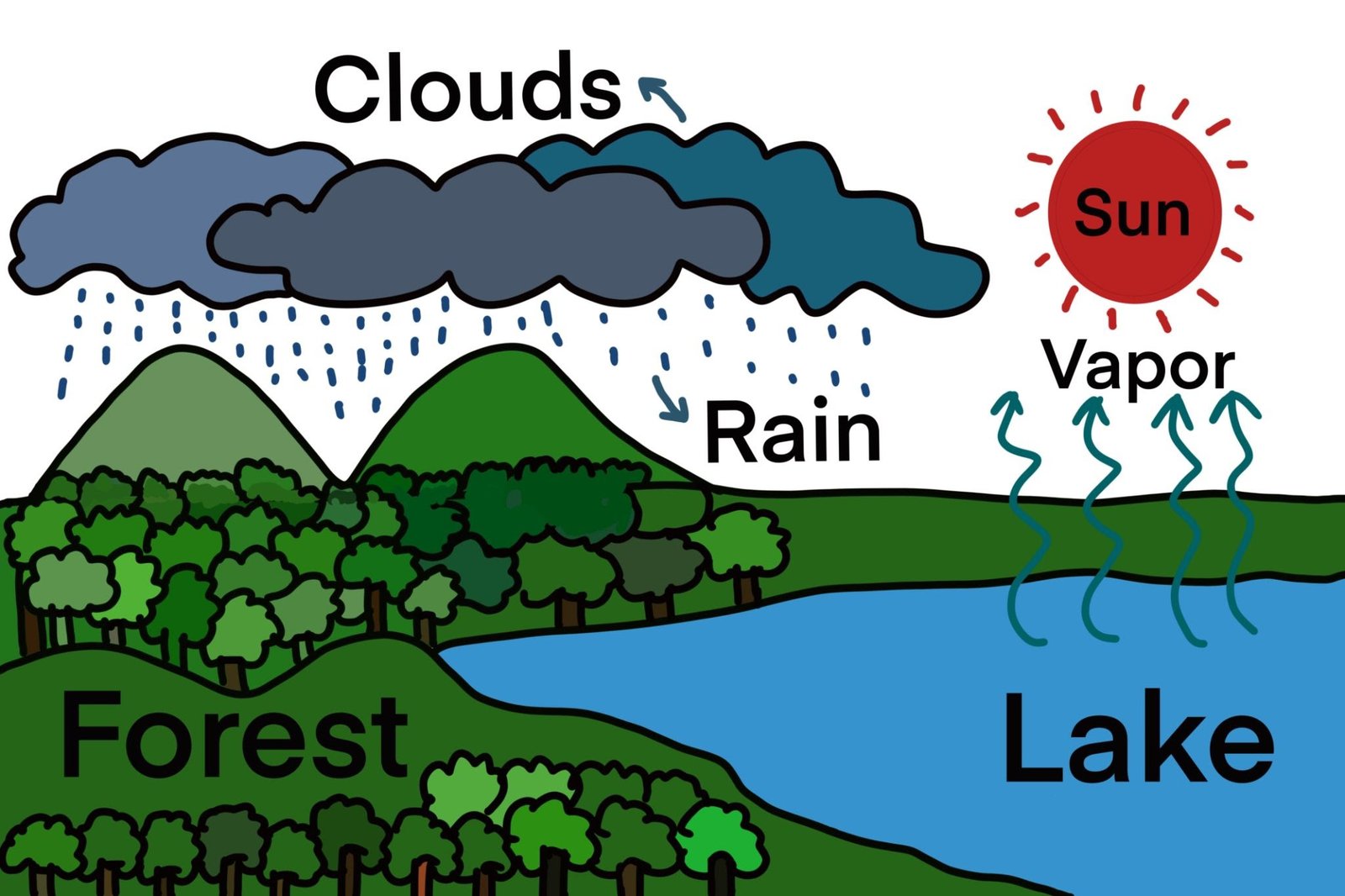
Think about what actually happens during the natural process of rain:
- The Ultimate Desalination Plant: Nature takes salty, completely undrinkable ocean water directly from the Sea—our primary water storage—leaves the heavy salt behind, distills it perfectly through evaporation, and lifts only the purest, sweetest fresh water into the sky.
- The World’s Deepest Washing System: Trees cannot scrub themselves. Dust and pollution block the tiny breathing pores (stomata) on their leaves. A heavy monsoon downpour acts like a high-pressure cosmic car wash, clearing out the grime so the lungs of our planet can breathe and photosynthesize at peak efficiency.
- The Great Temperature Regulator: By turning liquid water into vapor, the sun stores massive solar energy as latent heat. When that vapor moves to cooler regions and bursts into rain, it releases that stored energy. It is literally Earth’s central air conditioning system working across continents.
How the 5 Elements Collaborate in the Natural Process of Rain
What makes this system truly profound is that this entire automated operation is powered by a perfect partnership. Our ancient wisdom called them the Pancha Mahabhutas—the five great elements. If you remove even one of them from the equation, the entire water cycle collapses instantly.
Look at how they work together to tap nature’s oceanic storage and run God’s water supply line:
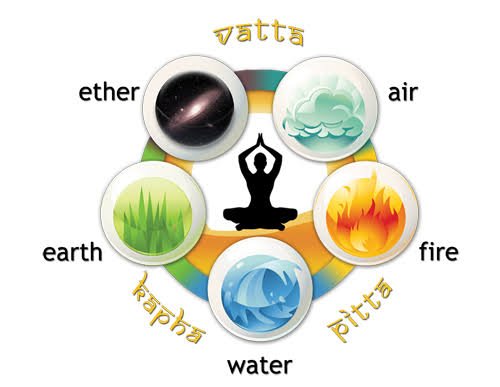
- Aakash (Space): The silent host. It provides the atmosphere and the massive canvas for clouds to form, travel across continents, and gravity to pull the drops down.
- Agni (The Sun): The engine. It acts as the cosmic thermal pump, heating the surface of the Sea to break its liquid bonds and lifting millions of tons of moisture into the sky against gravity.
- Vayu (Air): The logistics manager. It creates the wind currents and pressure zones to transport heavy rain-bearing clouds thousands of miles inland from the oceans to parched lands.
- Jala (Water): The shape-shifter. Changing from the vast liquid storage of the Sea to invisible vapor, to heavy clouds, and back to sweet rain—it is the lifeblood carrying nourishment.
- Prithvi (Earth): The gracious receiver. It absorbs the rainfall, cools its warm surface, routes the water into deep underground aquifers, and feeds the roots of the forests, eventually guiding the excess back to the Sea to refill the great storage tank.
Long before modern geography books mapped out these mechanics, this exact cycle of solar energy, evaporation, and sustenance was captured in the timeless Manu Smriti (3.76):
अग्नौ प्रास्ताहुतिः सम्यगादित्यमुपतिष्ठते ।
आदित्याज्जायते वृष्टिर्वृष्टेरन्नं ततः प्रजाः ॥
“The offerings made into the fire reach the Sun. From the Sun comes rain; from rain comes food (sustenance), and from food, all living beings are sustained.”
The Sacred Loop That Sustains Us
This isn’t just a beautiful process to admire from a distance; it is a wheel of creation that we are deeply a part of. In the Bhagavad Gita (Chapter 3, Verse 14), Sri Krishna explicitly points out our connection to this ecosystem:
अन्नाद्भवन्ति भूतानि पर्जन्यादन्नसंभवः ।
यज्ञाद्भवति पर्जन्यो यज्ञःकर्मसमुद्भवः ॥
“All living beings subsist on food, and food is produced by rains. Rains are produced by Yajna (harmony, respect, and selfless action with nature).”
When we respect our forests, keep our water bodies clean, and protect our atmosphere, we are performing our cosmic duty. In return, the natural process of rain works perfectly, drawing water from the grand storage of the Sea to bring timely monsoons, fertile soil, and abundance to sustain the Shristi.
Conclusion
The natural process of rain is the ultimate reminder that the universe operates as a single, living, conscious organism designed by a higher intelligence. The next time you hear the rumble of thunder and smell that beautiful petrichor (the scent of dry earth meeting the first drops), don’t just run for an umbrella. Pause and look at the trees getting washed. Look at the clouds moving across the sky, carrying the lifeblood of the great Sea right to your doorstep. You are witnessing a grand, divine symphony where nothing is wasted, and every element is working in perfect harmony to keep you alive.
Ram Niwas Bansal
“Dedicated and highly qualified professional with a specialized focus on Cooperative Housing Society (CHS) Management and Legal Advocacy. Leveraging a strong technical background and an Indian Air Force veteran’s discipline, I provide end-to-end solutions for housing societies in Mumbai.
With a Government Diploma in Cooperation and Accountancy (GDCA) and a Diploma in Naturopathy, I bridge the gap between administrative excellence and holistic community well-being.
⚠️ Disclaimer
This article explores the natural process of rain from a combined perspective of modern environmental science and traditional philosophical literature. The insights provided here are intended for educational, cultural, and spiritual appreciation of nature’s ecosystems and should not replace professional meteorological or scientific research.
Frequently Asked Questions (FAQs)
Q1: How does the natural process of rain clean the air and environment?
A1: Rain undergoes a process called “atmospheric scrubbing” or wet deposition. As raindrops fall through the sky, they attract and lock onto airborne particles like dust, smoke, pollen, and pollutants, pulling them down to the ground. This is why the air feels exceptionally crisp, clean, and easy to breathe immediately after a heavy shower.
Q2: What is the scientific relation between the Sun and rain as mentioned in ancient texts?
A2: Ancient texts like the Manu Smriti state that rain originates from the Sun. Modern science mirrors this completely: solar radiation is the primary driver of the water cycle. The Sun’s heat causes liquid water to evaporate into water vapor, acting as the primary pump that lifts water into the atmosphere so it can later condense and fall as rain.
Q3: Why is rainwater considered the best water for plants and trees?
A3: Unlike tap water, rainwater is 100% natural, completely soft (free of hard minerals), and slightly acidic, which helps dissolve soil nutrients so roots can absorb them easily. Most importantly, rainwater contains highly beneficial dissolved nitrogen, which acts as a natural, microscopic fertilizer that gives plants a deep, vibrant green color.