
Table of Contents
गर्मी में आपको भूख कम क्यों लगती है?
और क्यों शरीर खुद ठंडी चीज़ें मांगता है?”
Introduction
Why Summer Hydration Fruits? The scorching heat of summer often brings about a curious paradox: while our bodies demand constant hydration through sweating, our appetite for substantial meals seems to diminish significantly. If you’ve noticed this “summer slowing” of your digestion and a preference for lighter, fruitier foods, you’re not imagining it. You are, in fact, tuning into a profound biological reality and a principle of optimal seasonal living.
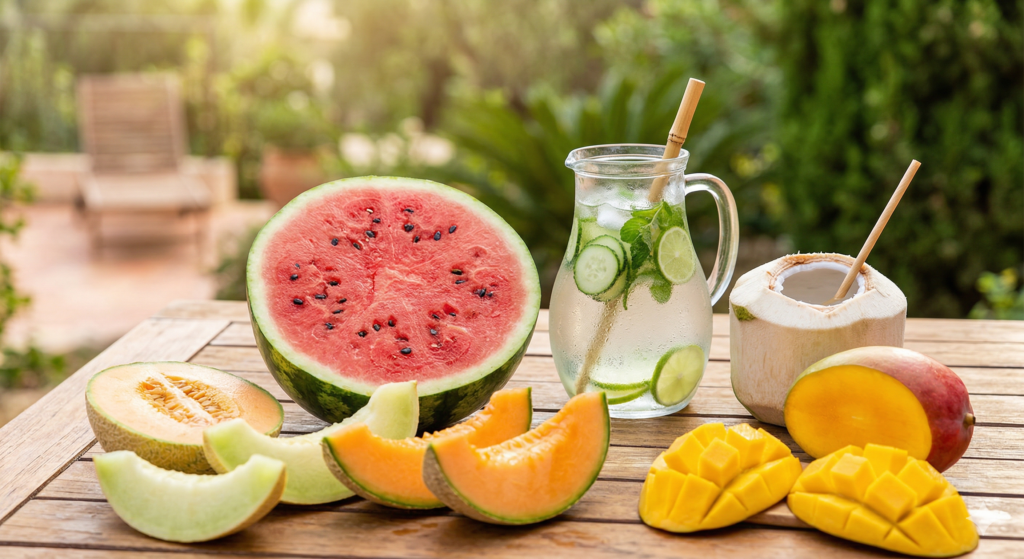
This alignment isn’t coincidental. Nature cleverly provides summer hydration fruits, a diverse menu of high-hydration, nutrient-dense, and easily digestible foods precisely when our bodies need them most. Let’s explore the physiological and naturopathic logic behind why we are naturally guided to shift our summer eating patterns, focusing on nature’s strategy to prevent dehydration and metabolic strain.
Protection From Heat with Summer Hyderation Fruits
- Lowered “Digestive Fire” (Agni): The metabolic enzymes and digestive juices are less effective.
- Diminished Appetite: The stomach requires a robust blood supply to manage heavy protein and fat breakdown. Without it, the “fullness” sensation is triggered more quickly by substantial food.
In traditional health systems like Ayurveda, this is described as the season where the “Jatharagni” (digestive fire) is at its lowest, naturally guiding us to consume lighter foods.
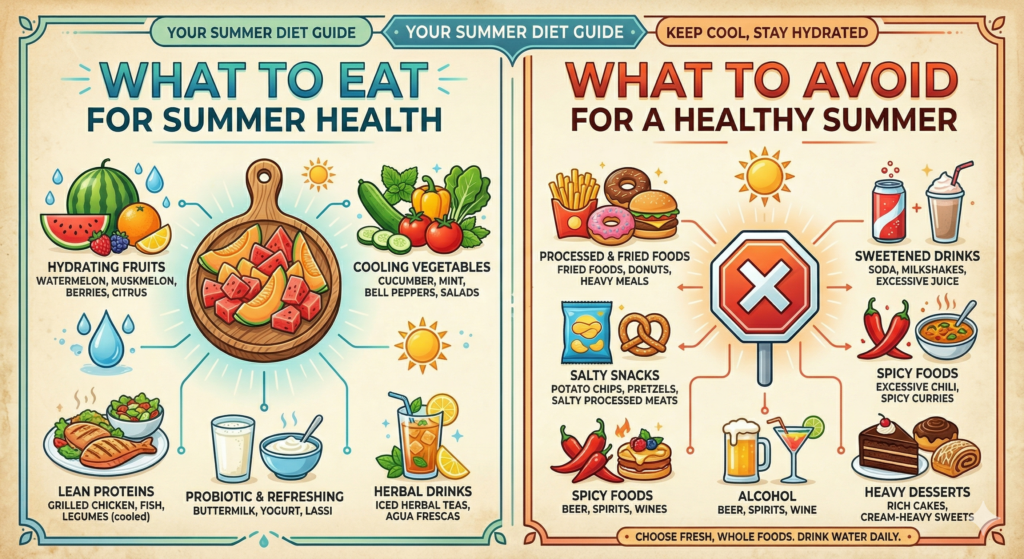
Minerals Lost Through Sweat made good with summer hydration fruits
While essential for cooling, sweating isn’t just a loss of water. It is a vital electrolyte-depleting process. The “evaporation from the body” mentioned in the initial observation includes significant losses of crucial minerals:
- Sodium (Chloride): The electrolyte most heavily lost through sweat.
- Potassium: Vital for heart function and cellular fluid balance.
- Magnesium & Calcium: Lost in smaller but crucial amounts, affecting muscle and nerve function.
When we consume plain water, we rehydrate, but we can sometimes dilute the remaining electrolytes (a condition called hyponatremia), leading to fatigue, cramping, and headaches.
This is where the structured fluid found in summer fruits excels.
Nature’s Treasure of Minerals: Summer Hydration Fruits
1. The Summer Hydration: Watermelon and Muskmelon
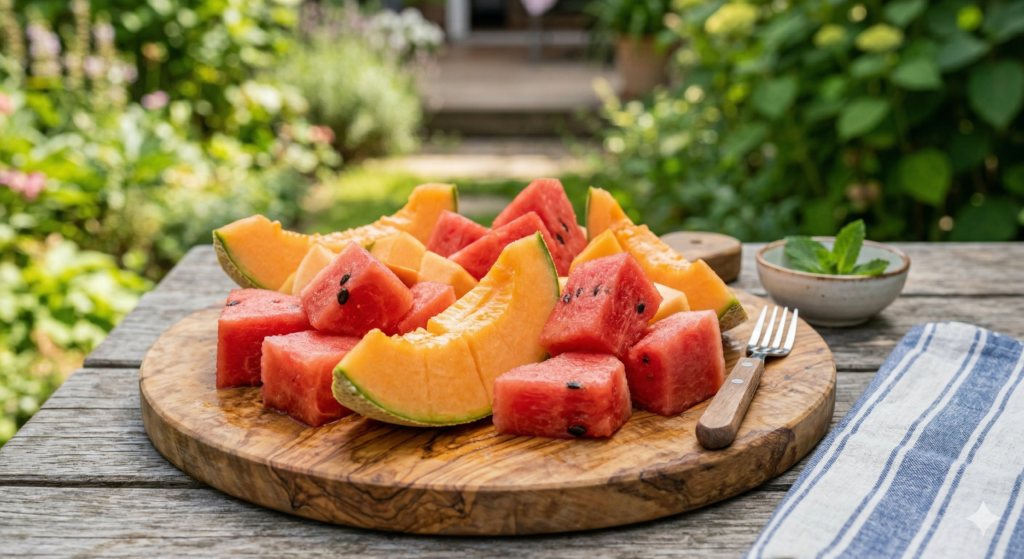
- Water Content: Both are composed of approximately 90-92% water.
- Mineral Richness: Crucially, summer hydration fruits are exceptional sources of potassium and some natural sodium. This allows for the replenishment of electrolytes while providing a slow release of simple sugars to maintain blood glucose levels, which might drop due to heat and lowered appetite.
- Structured Water: The fluid in these fruits is “structured” within cellular matrices, allowing the body to absorb it differently than bulk drinking water.
2. The King of summer hydration fruits : Mango
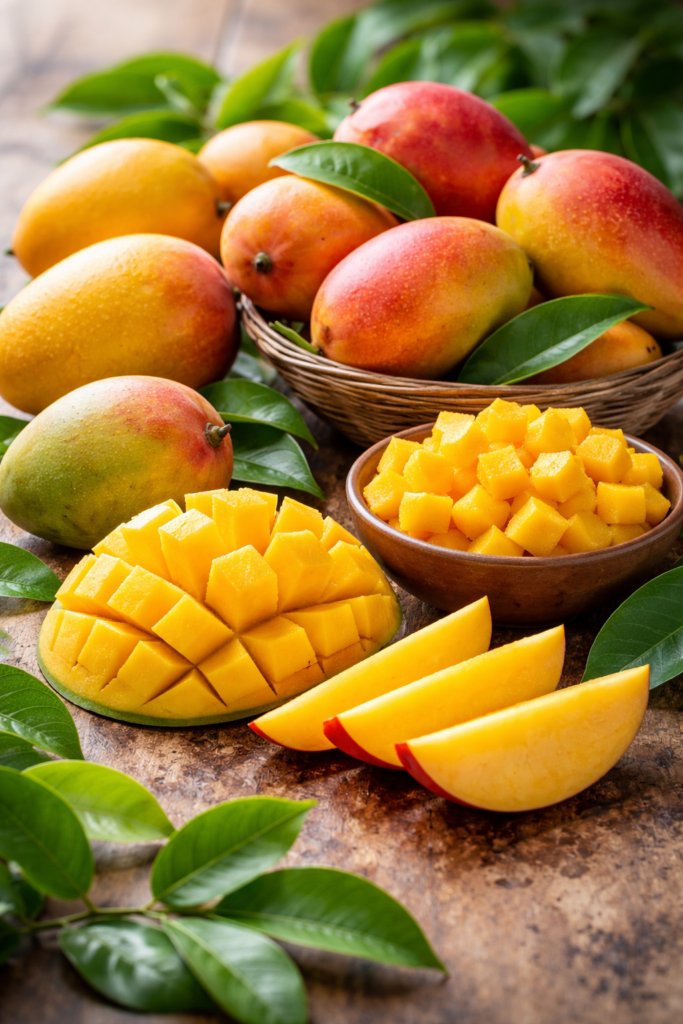
Mangoes are often called the “King of Fruits” for a reason. While slightly less “watery” (about 83% content) than melons, they provide dense nutrient replacement for sweat-depleted bodies.
- Vital Minerals: Mangoes are abundant in potassium (supporting heart and muscle health) and provide essential trace minerals like magnesium.
- Vitamin Content: High levels of Vitamin A and C help the body combat the increased oxidative stress caused by intense sun exposure and heat.
3. The Ultimate Electrolyte Primer: Coconut Water
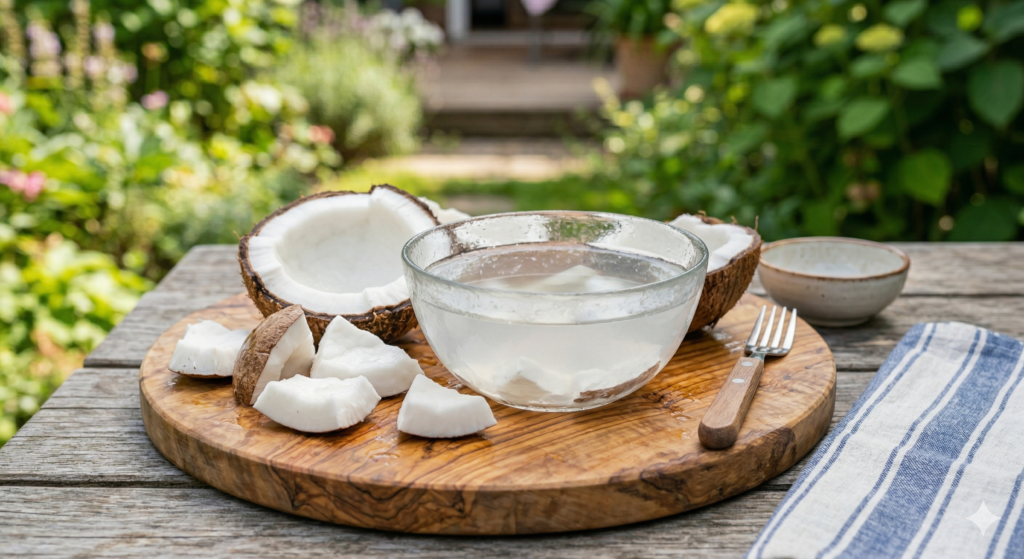
Though available year-round in tropical regions, coconut water is essential for optimal summer hydration logic.
- The Potassium-Sodium Pump: In cellular physiology, the efficiency of the body relies on the Sodium-Potassium pump. Coconut water has a uniquely high potassium-to-sodium ratio. Consuming it helps the cells manage fluid balance effectively before significant sweat loss.
A Naturopathic Framework for Summer Eating
From a naturopathic perspective, summer is a period where we emphasize specific principles:
| Fruit | Water Content | Benefit |
| Watermelon | 90% | Cooling |
| Mango | 82% | Vitamin C |
| Muskmelon | 85% | Cooling effect |
| Naturopathic Concept | Application in Summer | Physiology Metaphor |
| Pitta Shamaka | Foods and practices that “calm the internal heat” (Pitta). This includes high-water content, slightly sweet (summer hydration fruits), and non-spicy foods. | Mitigating systemic inflammation and oxidative stress. |
| Aakash Tatwa (“Space”) | Allowing for frequent, intentional frequent/short water fasts or days of “Mono-eating” (eating only one type of light fruit). This gives the weakened digestive fire a reprieve to focus on clearing other toxins. | Facilitating functional Bowel Rest. |
| Jala Tatwa (“Water”) | Emphasizing structured water intake through melons, cucumbers, and herbal infusions. | Utilizing bioavailable hydration over simple bulk fluid. |
Summary: (Summer Hydration Fruits)
To align with this natural logic, consider these guidelines for summer:
- Shift Your Proportions: Naturally move towards a diet that is heavily based on fruits and vegetables, reducing the volume of heavy grains, proteins, and dairy, especially during the peak daytime heat.
- Optimize Fruit Consumption with summer hydration fruits:
- Timing: Eat juicy fruits (especially summer hydration fruits like melons, mangoes) on an empty stomach or at least 30 minutes before a main meal to ensure they digest rapidly and don’t ferment.
- Preparation: Traditional practices like soaking mangoes in water (Phad) before eating may reduce their inherent “warming” quality (reducing Pitta).
- Embrace Seasonal Herbage: Introduce naturally cooling infusions, such as water steeped overnight with fennel (saunf), coriander, or dried rose petals. These assist the endocrine system in regulating heat stress.
By adjusting our intake and welcoming these juicy, mineral-rich summer hydration fruits, we are not merely “satisfying a craving.” We are partnering with nature’s logical, elegant design to maintain a balanced, healthy, and hydrated body throughout the most demanding season.
“Body हमेशा सही signal देता है…
problem ये है कि हम सुनना बंद कर चुके हैं।”
Disclaimer
This content is for educational purposes and not a substitute for professional medical advice. Please consult a doctor before making any major changes to your diet.