
Table of Contents
Introduction
3 types of Tapasya in Bhagavad Gita (Chapter 17, Verses 14 to 19) offer a profound framework for self-discipline, personal growth, and spiritual evolution. In the Shraddha Traya Vibhaga Yoga, Lord Krishna explains that everything we consume and practice—including Yajna (sacrifice), Tapa (penance), Dana (charity), and Aahara (food)—can be categorized into three gunas: Satvik (pure), Rajasik (passionate), and Tamasik (ignorant).
Among these, the concept of Tapa (austerity or penance) is deeply misunderstood as mere physical torture or extreme asceticism. However, the Gita beautifully breaks down Tapa into a holistic tri-fold practice affecting our body, speech, and mind.
Here is a comprehensive guide to understanding the 3 types of Tapasya in Bhagavad Gita and how they influence our spiritual energy.
The Classification of Tapasya by Expression (Verses 14–16)
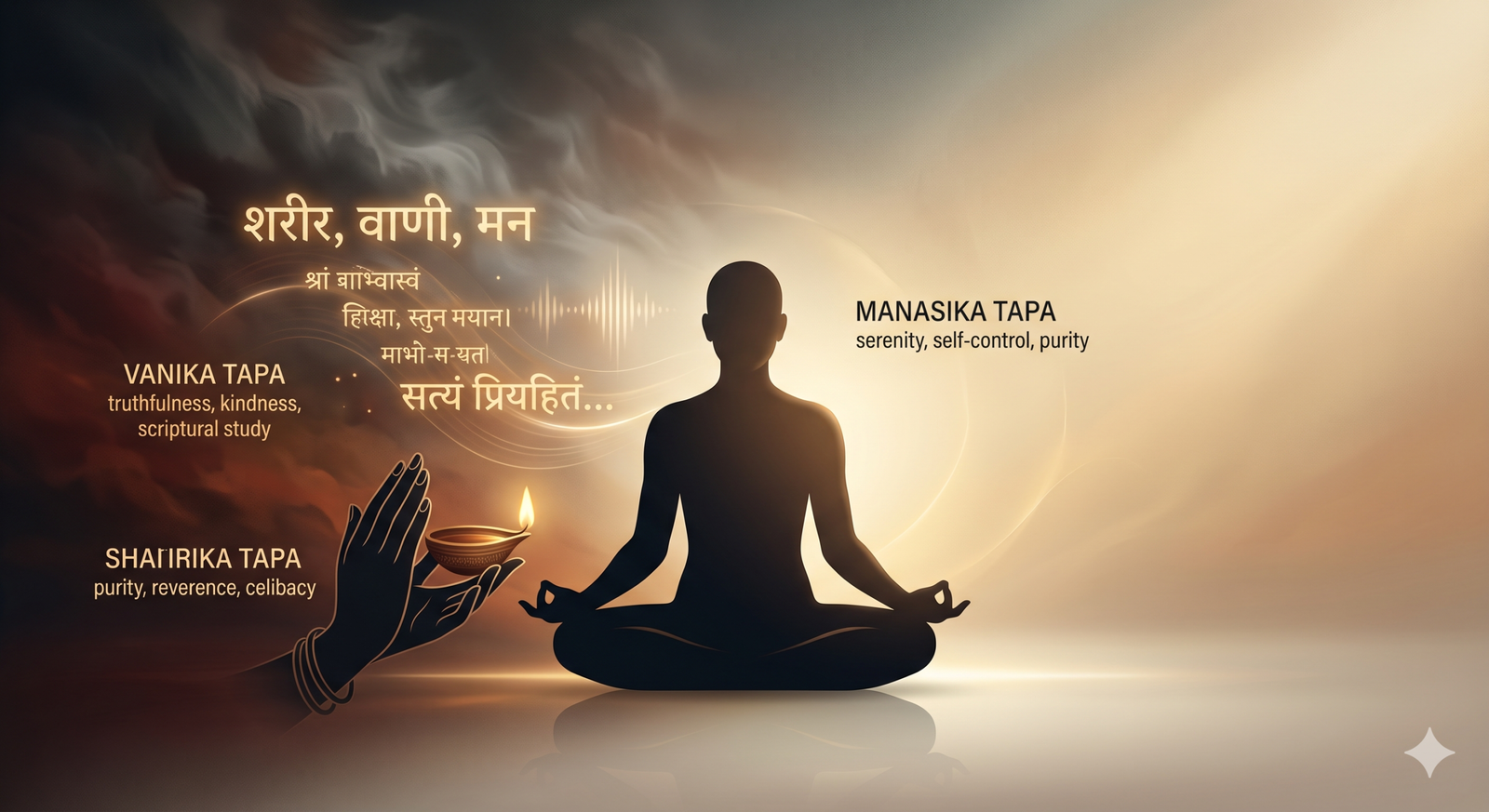
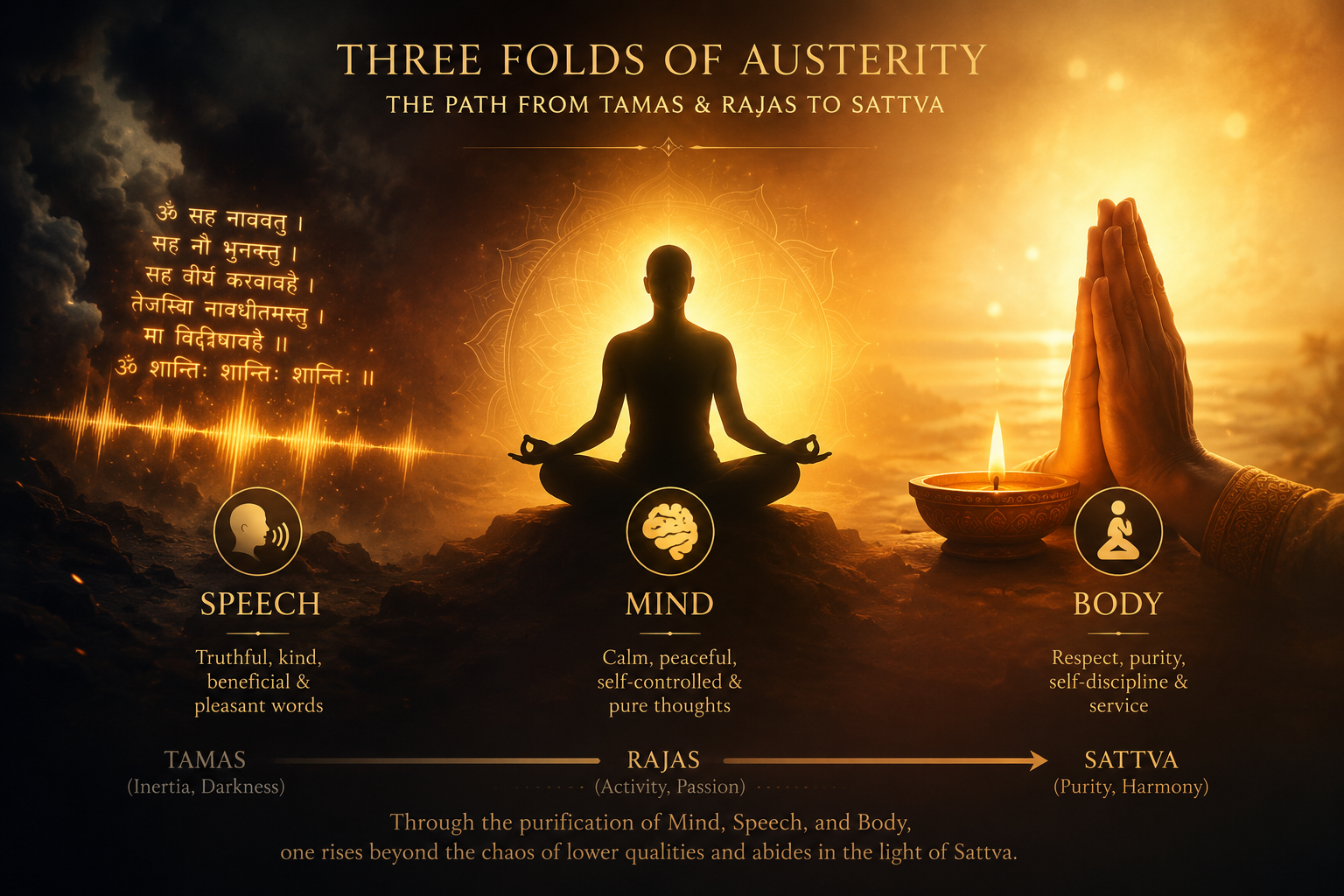
3 types of Tapasya in Bhagavad Gita: Lord Krishna first classifies Tapa based on how it is executed: through the body (Sharirik), speech (Vani), and mind (Mansik).
Sharirik Tapa (Austerity of the Body)
Explained in verse 14, physical austerity is not about self-mortification but about alignment, respect, and cleanliness. It includes:
- Reverence: Offering worship and respect to the Divine, the Brahmins (the wise), spiritual teachers (Gurus), and elders.
- Purity (Pavitrata): Maintaining external and internal cleanliness.
- Simplicity (Saralata): Living a straightforward life free from duplicity.
- Celibacy (Brahmacharya): Control over physical desires and senses.
- Non-violence (Ahimsa): Causing no physical harm to any living being.
Vani Ka Tapa (Austerity of Speech)
Verse 15 defines the discipline of words. True verbal austerity means your speech must meet four criteria simultaneously:
- Truthfulness (Yatharth): Speaking what is true and factual.
- Pleasantness (Priya): Delivering truth in a kind and gentle manner.
- Beneficial (Hitkarak): Speaking only what is useful and good for others.
- Non-Agitating: Words that do not cause unwarranted excitement, anger, or distress to listeners.
- Scriptural Study: Regular recitation of sacred texts and chanting the names of the Divine.
Mansik Tapa (Austerity of the Mind)
Verse 16 highlights the highest form of discipline—mastery over our thoughts. Mental austerity consists of:
- Serenity (Man ki Prasannta): Maintaining a cheerful and calm disposition.
- Gentleness (Shant Swabhav): Cultivating a peaceful, kind attitude toward all.
- Silence (Mauna): Quieting the internal chatter of the mind.
- Self-Control (Man ka Nigrah): Regulating wandering thoughts and impulses.
- Purity of Purpose: Ensuring motives are transparent, honest, and free from malice.
The 3 Gunas: Satvik, Rajasik, and Tamasik Tapasya (Verses 17–19)
When these physical, verbal, and mental austerities are practiced, they are further influenced by human intent and nature. This divides them into the 3 types of Tapasya in Bhagavad Gita based on the Gunas.
Tri-Fold Tapasya in BG
│
┌──────────────────┼──────────────────┐
Satvik Tapa Rajasik Tapa Tamasik Tapa
(Pure/Selfless) (Pride/Showmanship) (Delusion/Harm)
1. Satvik Tapa (The Pure Austerity)
When physical, verbal, and mental disciplines are practiced with supreme faith, without desiring rewards or recognition, and purely out of a sense of duty toward the Divine, it is called Satvik Tapa. This elevates human consciousness and burns away past karmic baggage.
2. Rajasik Tapa (The Passionate Austerity)
When penance is performed with ostentation, showmanship, or the goal of gaining status, respect (Maan), adoration (Satkaar), and worship (Pooja) from others, it is Rajasik Tapa. Lord Krishna states that the fruits of such ego-driven penance are unstable, temporary, and shallow.
3. Tamasik Tapa (The Ignorant Austerity)
When austerity is undertaken out of foolishness (Mudhta), stubbornness (Hath), or delusion, it falls under Tamasik Tapa. This includes causing self-inflicted pain to the body, mind, or speech, or performing rituals with the malicious intent to harm or destroy someone else.
Conclusion
Understanding the 3 types of Tapasya in Bhagavad Gita reveals that spirituality is deeply practical. True austerity isn’t about escaping to the mountains; it is about cleaning your speech, honoring your elders, respecting your body, and keeping your mind calm amidst chaos. By shifting our daily habits from Tamasik or Rajasik tendencies toward Satvik discipline, we unlock inner peace, clarity, and ultimate spiritual liberation.
Frequently Asked Questions (FAQs)
Q1. What are the 3 types of Tapasya in Bhagavad Gita?
The Bhagavad Gita categorizes Tapasya based on expression—Body (Sharirik), Speech (Vani), and Mind (Mansik). Based on intention and quality, these are further divided into Satvik (pure), Rajasik (passionate/selfish), and Tamasik (ignorant/harmful).
Q2. What is an example of Vani ka Tapa (Austerity of Speech)?
Speaking a truth gently, without causing panic or anger, while ensuring it benefits the listener, is an example of Vani ka Tapa. Chanting mantras or reading spiritual texts also falls under this.
Q3. Why is Tamasik Tapasya considered harmful?
Tamasik Tapasya is driven by delusion or stubbornness. It involves torturing one’s own body or mind, or performing rituals with the negative intention of causing harm or destruction to others.
Disclaimer
3 types of Tapasya in Bhagavad Gita: The insights shared in this article are based on interpretations of Chapter 17 of the Bhagavad Gita. Readers are encouraged to study the original verses and commentaries by learned spiritual masters for a deeper personal understanding.