
Table of Contents
Introduction (Statutory Records Housing Society)
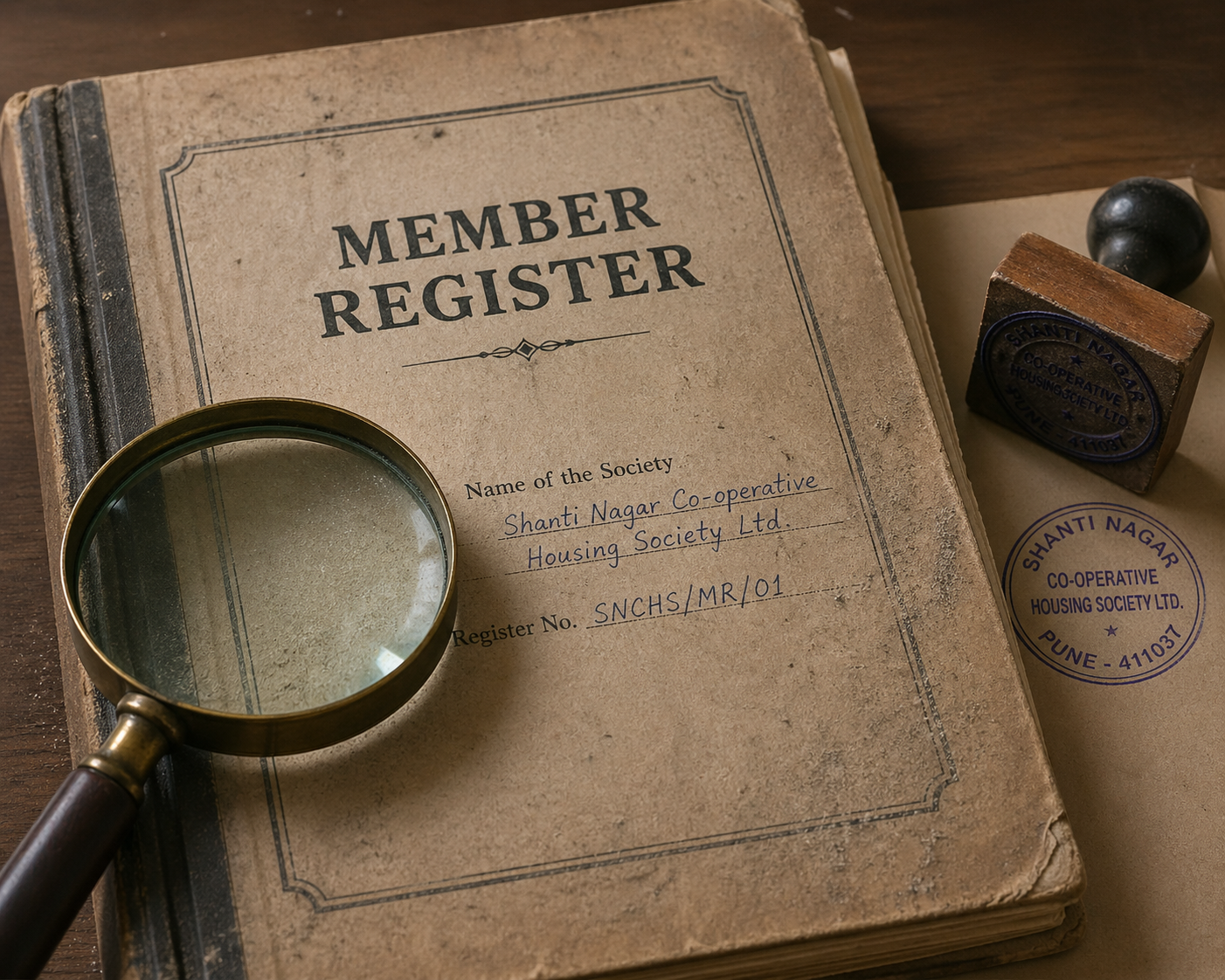
Statutory Records Housing Society: In the ecosystem of Cooperative Housing Societies (CHS), statutory records are the backbone of legal existence. Yet, in almost all societies, these records are rarely up to date. From the ‘I’ and ‘J’ registers to the Minutes Books, the administrative state of many societies is alarming. This negligence isn’t just a clerical error; it’s a systemic failure of accountability.
Based on my professional observations, here are the 5 core reasons for this crisis:
The Knowledge Deficit
Statutory Records Housing Society: The primary reason is a stark lack of knowledge. Many Managing Committee members and managers assume that “managing” only involves collecting maintenance and fixing leaks. They remain unaware of the statutory requirements mandated by the MCS Act. Without understanding the why and how of record-keeping, the records are naturally neglected. Unknowingly, they believe that their records are up to date.
The Reliance on Superficial Auditing
Statutory Records Housing Society: Auditors are meant to be the watchdogs. However, it is observed that many auditors do not perform physical verification of registers. They rely heavily on the digital or verbal inputs provided by office bearers. If the auditor doesn’t insist on seeing the physical books, the committee feels no pressure to maintain them.
Member Apathy and Obstruction
As per Bye-law 32, every member has a right to inspect records. Unfortunately, most members don’t bother to spare time. Those who do are often discouraged or viewed with suspicion by the committee. When the “owners” (members) stop asking questions, the “trustees” (committee) stop keeping records.
The Handover Failure
The buck stops with the office bearers in the chair. The most critical failure occurs during elections. Outgoing committees often walk away without a proper “Handover/Taking Over” (HOTO) process. If the incoming committee lacks the knowledge to verify what they are receiving, they should hire an expert to facilitate this transition.
The “Not During My Tenure” Excuse
Statutory Records Housing Society: When discrepancies are noticed, the standard response is, “It didn’t happen during our tenure.” This is a weak defense. By accepting the office, you accept the responsibility of all prior records. If there are gaps, it is the committee’s duty to conduct a “Status Audit” by an expert and bring the findings to the members via a Special General Meeting (SGM) or the next AGM.
Conclusion
Accountability cannot be outsourced with respect to Statutory Records Housing Society:. If you are an office bearer, ensure your records are pristine. If you are a member, exercise your right to inspect.
Frequently Asked Questions
Q: Can a member be denied access to statutory records?
A: No. Under Bye-law 32, members have the legal right to inspect records during office hours with prior notice.
Q: What should a new committee do if records are missing?
A: They should immediately hire a professional consultant to document the missing links and report it to the General Body.
Disclaimer:
This article is for informational purposes only and does not constitute legal advice.
हाऊसिंग सोसायटियों में वैधानिक रिकॉर्ड की बदहाली: जिम्मेदार कौन?
सहकारी आवास समितियों (CHS) में एक कड़वा सच यह है कि वहां के वैधानिक रिकॉर्ड (Statutory Records) कभी अपडेट नहीं होते। यह केवल एक प्रशासनिक लापरवाही नहीं, बल्कि सदस्यों के भरोसे के साथ खिलवाड़ है।
मेरे अनुभव के अनुसार, इसके 5 मुख्य कारण निम्नलिखित हैं:
1. ज्ञान का अभाव
प्रबंधन समिति (MC) और प्रबंधकों में अक्सर कानूनी ज्ञान की कमी होती है। उन्हें लगता है कि केवल मेंटेनेंस जमा करना ही प्रबंधन है, जबकि कानूनन ‘I’ रजिस्टर, ‘J’ रजिस्टर और मिनट बुक्स बनाए रखना अनिवार्य है।
2. ऑडिटर्स की कार्यशैली
अक्सर देखा गया है कि ऑडिटर्स भौतिक रूप से रजिस्टरों की जांच करने के बजाय, पदाधिकारियों द्वारा दिए गए डेटा पर भरोसा कर लेते हैं। जब तक ऑडिटर सख्ती से फिजिकल वेरिफिकेशन नहीं करेंगे, तब तक रिकॉर्ड सही नहीं होंगे।
3. सदस्यों की उदासीनता
उप-नियम 32 के तहत सदस्यों को रिकॉर्ड देखने का अधिकार है, लेकिन जागरूकता की कमी या समिति के डर से वे इस अधिकार का उपयोग नहीं करते। जब सदस्य सवाल नहीं पूछते, तो कमेटी भी लापरवाह हो जाती है।
4. हैंडओवर की प्रक्रिया का न होना
सबसे बड़ी जिम्मेदारी उन पदाधिकारियों की है जो चुनाव के बाद चार्ज लेते समय ‘हैंडओवर’ की उचित प्रक्रिया नहीं अपनाते। यदि उन्हें रिकॉर्ड की जानकारी नहीं है, तो उन्हें किसी विशेषज्ञ की सलाह लेनी चाहिए। चार्ज लेने के बाद पुरानी गलतियों की जिम्मेदारी भी आपकी हो जाती है।
5. “हमारे समय में नहीं हुआ” का बहाना
जब भी कोई गलती पकड़ी जाती है, तो समिति कह देती है कि यह पिछले कार्यकाल की गलती है। यह कानूनी रूप से गलत है। आपको चार्ज लेते ही एक विशेषज्ञ से ऑडिट कराना चाहिए और किसी भी गड़बड़ी को SGM या AGM में सदस्यों के सामने रखना चाहिए।
निष्कर्ष
सोसायटी का प्रबंधन केवल पद संभालना नहीं, बल्कि जिम्मेदारी निभाना है। रिकॉर्ड्स को अपडेट रखना कानूनी और नैतिक दोनों रूप से जरूरी है।
Ram Niwas Bansal
“Dedicated and highly qualified professional with a specialized focus on Cooperative Housing Society (CHS) Management and Legal Advocacy. Leveraging a strong technical background and an Indian Air Force veteran’s discipline, I provide end-to-end solutions for housing societies in Mumbai.
With a Government Diploma in Cooperation and Accountancy (GDCA 2024) and a Diploma in Naturopathy, I bridge the gap between administrative excellence and holistic community well-being.
अस्वीकरण (Disclaimer)
यह लेख केवल सूचनात्मक उद्देश्यों के लिए है। किसी भी कानूनी कार्यवाही के लिए कृपया विशेषज्ञ सलाहकार से संपर्क करें।
अक्सर पूछे जाने वाले प्रश्न (FAQs)
प्रश्न: क्या सदस्य रिकॉर्ड की मांग कर सकते हैं?
उत्तर: हाँ, उप-नियम 32 के अनुसार सदस्य उचित प्रक्रिया का पालन कर रिकॉर्ड देख सकते हैं।
प्रश्न: अगर पुरानी समिति रिकॉर्ड न दे तो क्या करें?
उत्तर: नई समिति को रजिस्ट्रार के पास शिकायत दर्ज करनी चाहिए और किसी एक्सपर्ट से रिकॉर्ड का ‘स्टेटस ऑडिट’ कराना चाहिए।