Table of Contents
Introduction
Essential Vitamins Guide 2026: Think of your body as a high-end sports car. While fuel (calories) gets you moving, vitamins are the essential additives that keep the engine from seizing, the lights from flickering, and the rust from forming. Even though we only need them in “trace” amounts, their absence can bring the entire system to a grinding halt.
Here is your comprehensive breakdown of these micronutrients, how to manage them, and what happens when the balance tips too far in either direction.
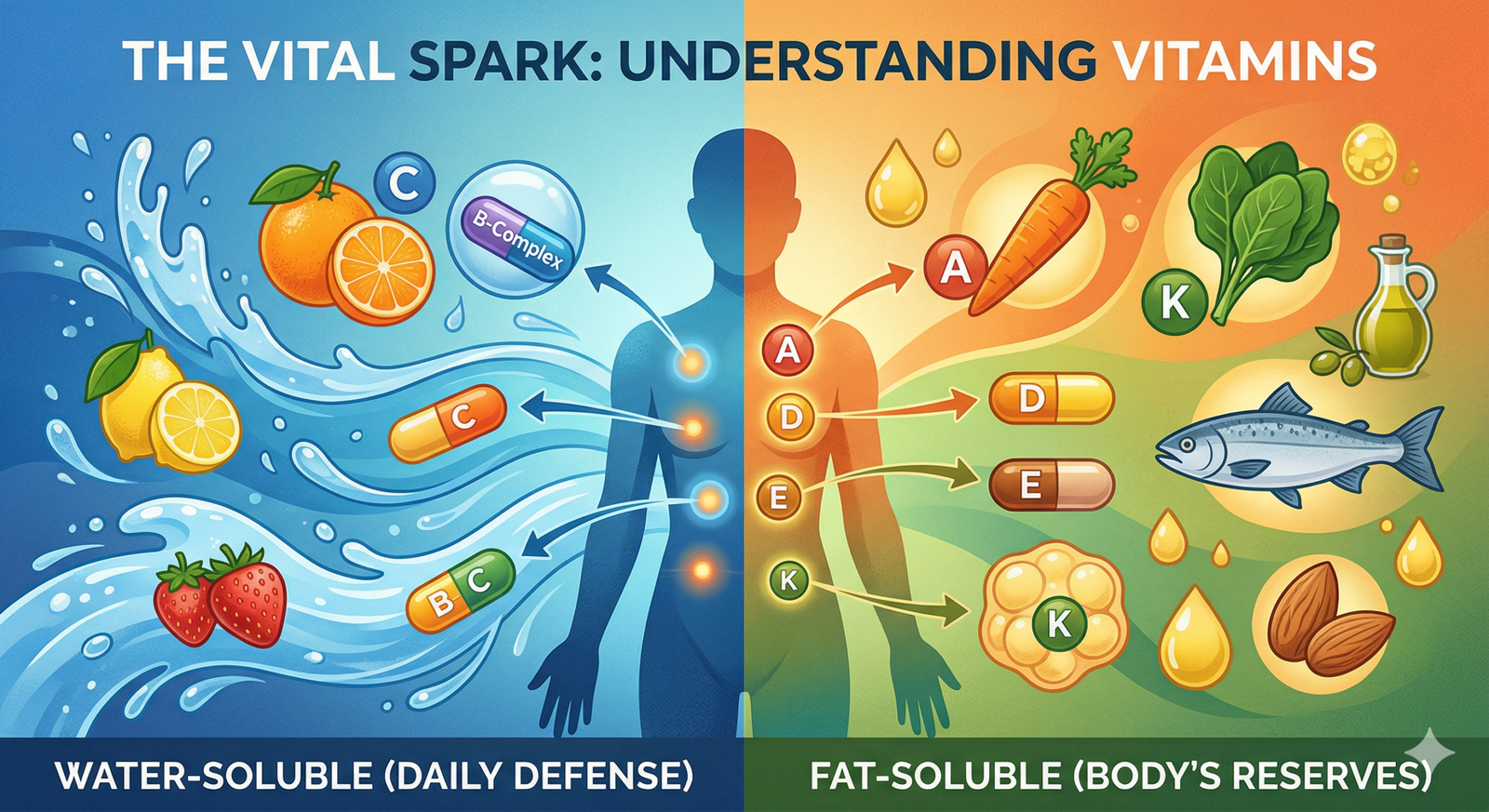
1. The Water-Soluble Warriors: B-Complex & C
These essential vitamins are the “daily commuters” of your body. They dissolve in water, enter your bloodstream directly, and—crucially—cannot be stored. If you take more than you need, your kidneys filter the excess out within 24 hours. This means daily intake through diet is non-negotiable.
The B-Complex Family
| Vitamin | Common Name | Deficiency Disease | Excess Symptoms | Top Food Sources |
|---|---|---|---|---|
| B1 | Thiamine | Beriberi (Nerve/Heart issues) | Rarely toxic | Whole grains, pork, legumes |
| B2 | Riboflavin | Ariboflavinosis (Cracked lips) | Bright yellow urine (harmless) | Eggs, lean meats, milk |
| B3 | Niacin | Pellagra (Dermatitis, Dementia) | “Niacin Flush” (Skin redness) | Chicken, tuna, peanuts |
| B5 | Pantothenic Acid | Paresthesia (“Burning feet”) | Diarrhea | Avocados, mushrooms |
| B6 | Pyridoxine | Anemia, Depression | Nerve damage (long-term) | Bananas, chickpeas, salmon |
| B7 | Biotin | Hair loss, Skin rashes | Unlikely/Rare | Eggs (cooked), nuts, seeds |
| B9 | Folate | Neural Tube Defects (in Pregnancy) | Masks B12 deficiency | Spinach, lentils, asparagus |
| B12 | Cobalamin | Pernicious Anemia, Fatigue | Generally safe | Meat, dairy, fortified cereals |
Vitamin C (Ascorbic Acid)
- The Role: Collagen synthesis, immune support, and antioxidant protection.
- Deficiency: Scurvy (bleeding gums, weakness, bruising).
- Excess (Toxicity): Diarrhea, nausea, and potential kidney stones.
- Food Sources: Citrus fruits, bell peppers, strawberries, and broccoli.
2. The Fat-Soluble Reserves: A, D, E, & K
Unlike their water-soluble cousins, these essential vitamins are stored in your liver and fatty tissues. They don’t need to be consumed every single day because your body maintains a “savings account” of them. However, this also means they can build up to toxic levels if over-supplemented.
Vitamin A (Retinol/Beta-Carotene)
- The Role: Vision, skin health, and immune function.
- Deficiency: Night Blindness and Xerophthalmia (dry eyes).
- Excess: Blurred vision, bone pain, and liver damage.
- Food Sources: Carrots, sweet potatoes (as Beta-Carotene), liver, and egg yolks.
Vitamin D (The Sunshine Vitamin)
- The Role: Calcium absorption and bone mineralization.
- Deficiency: Rickets (in children) or Osteomalacia/Osteoporosis (in adults).
- Excess: Hypercalcemia (excess calcium in the blood), leading to heart and kidney damage.
- Food Sources: Sunlight exposure, fatty fish, and fortified milk.
Vitamin E (Tocopherol)
- The Role: A powerful antioxidant that protects cell membranes.
- Deficiency: Nerve and muscle damage, vision problems.
- Excess: Increased risk of bleeding (interferes with blood clotting).
- Food Sources: Almonds, sunflower seeds, and spinach.
Vitamin K
- The Role: Essential for blood clotting and bone health.
- Deficiency: Excessive bleeding and easy bruising.
- Excess: Rare, but can interfere with blood-thinning medications (like Warfarin).
- Food Sources: Kale, spinach, Brussels sprouts, and fermented foods.
3. Management: Food First, Supplements Second
Managing your vitamin intake doesn’t require a chemistry degree—it requires a colorful plate to make good the essential vitamins.
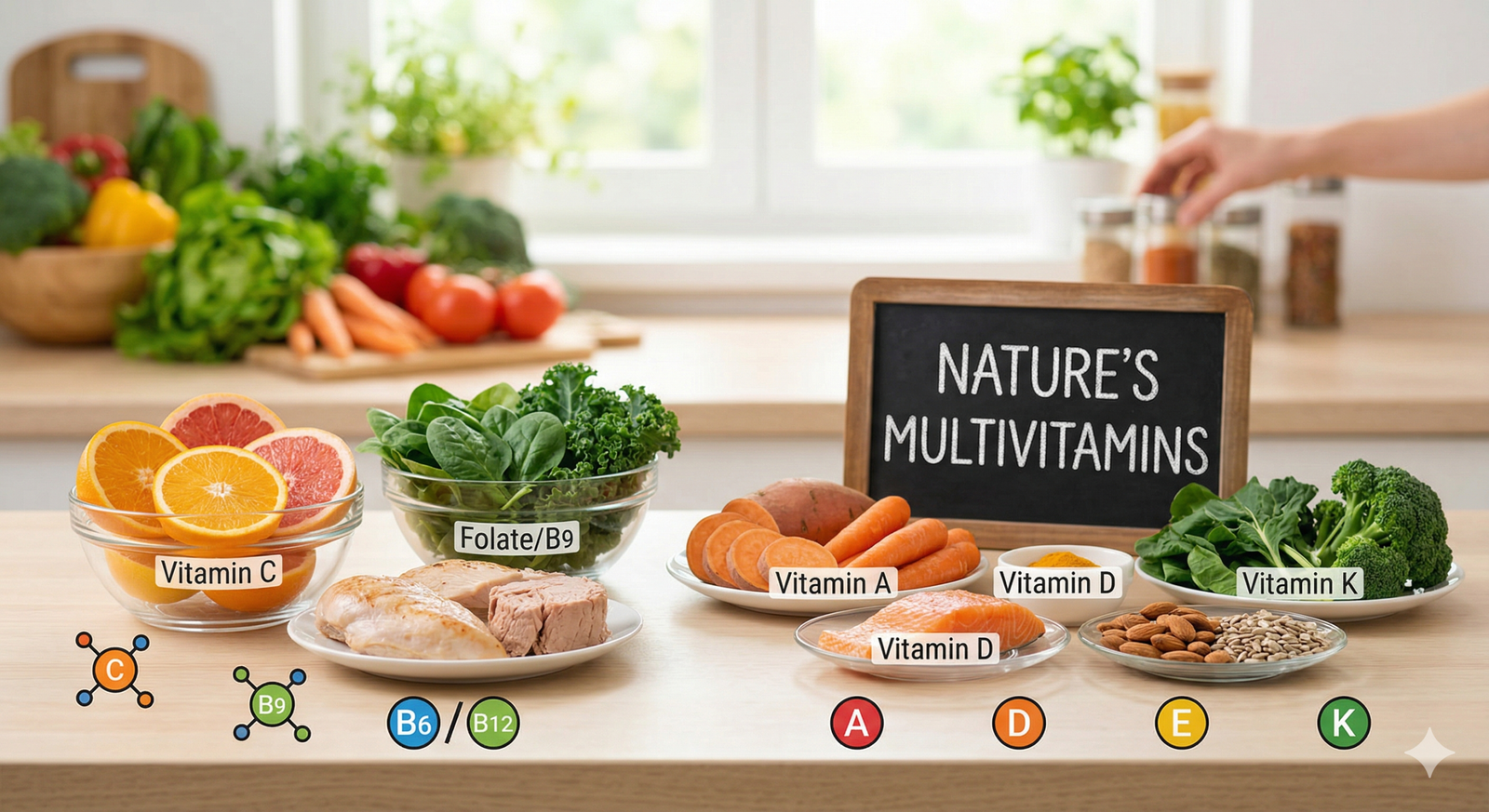
- Eat the Rainbow: Different colors in vegetables usually indicate different vitamins (e.g., orange for Vitamin A, dark green for Vitamin K and Folate).
- Pair Fats with Fat-Solubles: Since A, D, E, and K need fat to be absorbed, eat your carrots or kale with a drizzle of olive oil or a slice of avocado.
- Fresh is Best: Water-soluble vitamins (especially C and B) are sensitive to heat and light. To preserve them, steam your veggies rather than boiling them for long periods.
Frequently Asked Questions (FAQs)
Q1: Can I get all my vitamins from a vegan diet?
A: Mostly, yes, with one major exception: Vitamin B12. B12 is found naturally only in animal products. Vegans should look for fortified foods or consult a doctor about a B12 supplement.
Q2: Is it possible to “overdose” on vitamins?
A: Yes, specifically with fat-soluble vitamins (A, D, E, K). Because they aren’t flushed out daily, taking high-dose supplements over a long period can lead to toxicity.
Q3: Why is my urine neon yellow after taking a multivitamin?
A: Don’t panic! This is usually just your body flushing out excess Vitamin B2 (Riboflavin). It’s a sign that the “water-soluble” rule is working perfectly.
Q4: Does cooking destroy vitamins?
A: High heat can reduce the levels of Vitamin C and some B vitamins. To keep them intact, try quick cooking methods like blanching or stir-frying.
The Bottom Line: Balance is Key
Essential Vitamins may only be required in microscopic amounts, but they are the silent architects of our health. Understanding the fundamental difference between the daily-use water-soluble vitamins and the stored fat-soluble vitamins is the first step toward a smarter nutritional strategy.
While a deficiency can lead to chronic illness, it is equally important to remember that “more” is not always “better.” The goal isn’t to flood your system with supplements, but to provide your body with a steady, diverse stream of nutrients through whole foods. By focusing on a balanced diet rich in colors, healthy fats, and fresh produce, you ensure that your “biological engine” has exactly what it needs to run smoothly for years to come.
Prioritize your plate, listen to your body, and always consult a professional before making major changes to your nutrient intake.
Disclaimer
This information is for educational purposes only and does not constitute medical advice. Vitamin requirements vary based on age, gender, and health status. Always consult with a healthcare professional or a registered dietitian before starting a new supplement regimen, especially if you are pregnant, nursing, or taking prescription medications.